
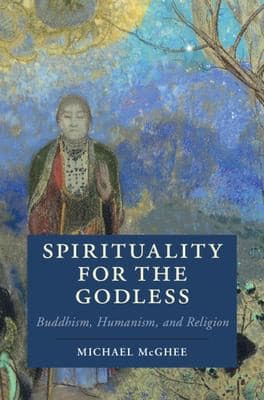
Spirituality for the Godless: Buddhism, Humanism, and Religion
الروحانية للملحدين: البوذية والإنسانية والدين
Spiritualité pour les sans-dieu : Bouddhisme, humanisme et religion
Editorial summary
This monograph presents a sophisticated exploration of how Buddhist philosophy and practice can inform a contemporary secular spirituality that eschews traditional theistic frameworks. McGhee develops what he terms "godless religion," arguing that meaningful spiritual life need not depend upon belief in supernatural entities or divine beings. The work positions itself against both conventional religious theism and reductive materialist atheism, seeking instead to articulate a middle path that preserves the transformative dimensions of religious practice while remaining compatible with naturalistic worldviews.
Central to McGhee's argument is the claim that Buddhism, properly understood, offers resources for spiritual development that require no commitment to metaphysical beliefs about gods or supernatural realms. He examines how Buddhist meditation practices, ethical frameworks, and philosophical insights can be appropriated by contemporary secular practitioners without contradiction. The author engages critically with New Atheist dismissals of all religious phenomena, arguing that such positions fail to recognize the practical wisdom embedded in contemplative traditions. Simultaneously, he challenges traditional religious apologetics that insist spiritual growth necessarily requires theistic belief.
The work draws heavily on phenomenological approaches to religious experience, particularly in analyzing how Buddhist mindfulness practices cultivate forms of awareness and ethical sensitivity that transcend ordinary consciousness without invoking transcendent beings. McGhee examines the intersection of Buddhist thought with Western humanism, suggesting that both traditions share commitments to human flourishing, compassion, and the reduction of suffering. His methodology combines philosophical analysis with attention to lived practice, drawing on both classical Buddhist texts and contemporary meditation movements.
Particularly significant is McGhee's treatment of the concept of the sacred within non-theistic frameworks. He argues that experiences traditionally categorized as religious or sacred need not be understood as encounters with divine reality but can be reinterpreted as profound recognitions of interdependence, impermanence, and the constructed nature of self. This reconceptualization allows for what he calls "spiritual naturalism," preserving the transformative power of religious practice while remaining consistent with scientific understanding.
The monograph contributes to ongoing debates about the nature of religion in secular contexts, the possibility of non-theistic spirituality, and the relevance of Asian philosophical traditions to Western thought. McGhee's work challenges both religious and secular orthodoxies, proposing that the sharp dichotomy between religious and non-religious worldviews obscures important possibilities for human development that transcend this binary.
Argument formulations engaged
McGhee, Michael (2018). Spirituality for the Godless: Buddhism, Humanism, and Religion.
@book{spirituality-for-the-godless-buddhism-hu,
  author    = {McGhee, Michael},
  title     = {Spirituality for the Godless: Buddhism, Humanism, and Religion},
  year      = {2018},
  url       = {https://god-database.com/en/works/spirituality-for-the-godless-buddhism-humanism-and-religion-2018}
}