
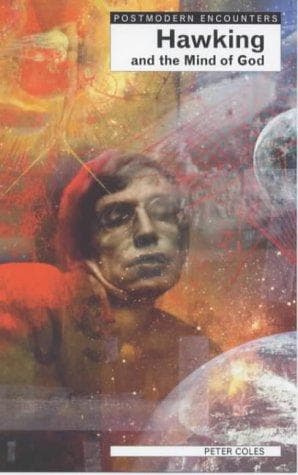
Stephen Hawking and the Mind of God
ستيفن هوكينج وعقل الله
Stephen Hawking et l'esprit de Dieu
Hawking's cosmological vision, particularly his invocation of a 'mind of God,' does not constitute a genuine theological argument but rather a rhetorical flourish that obscures the real limits of physics in addressing ultimate questions.
Editorial summary
This work examines Stephen Hawking's complex and evolving relationship with theological questions arising from cosmology, particularly focusing on how his scientific theories intersect with traditional arguments for God's existence. Coles traces Hawking's intellectual journey from his early openness to theological implications in cosmology to his later, more naturalistic positions, analyzing how this shift reflects broader tensions within the philosophy of science.
The monograph centers on Hawking's treatment of two classical theistic arguments: the cosmological argument and the fine-tuning argument. Regarding the cosmological argument, Coles explores how Hawking's no-boundary proposal attempts to eliminate the need for a divine first cause by suggesting the universe is self-contained, without beginning or end in imaginary time. This move, Coles argues, represents not merely a scientific hypothesis but a philosophical stance about the sufficiency of physical laws to explain existence itself. The analysis reveals how Hawking's famous question "What is it that breathes fire into the equations?" acknowledges a explanatory gap that his physics cannot fully address.
On fine-tuning, Coles examines Hawking's ambivalent response to the apparent cosmic coincidences that permit life. While Hawking occasionally acknowledged the striking nature of these coincidences, he ultimately favored naturalistic explanations, including early versions of multiverse thinking. Coles situates this preference within Hawking's broader methodological commitment to avoiding supernatural explanations in science, while questioning whether this commitment itself represents a philosophical rather than purely scientific choice.
The work's significance lies in its careful documentation of how one of the twentieth century's most influential physicists navigated the boundary between physics and metaphysics. Coles demonstrates that Hawking's positions on God were neither simple nor static, but evolved through engagement with both scientific discoveries and philosophical reflection. The monograph contributes to ongoing debates about methodological naturalism in science by showing how even explicitly atheistic scientists like Hawking cannot entirely escape theological questions when addressing ultimate origins.
Coles maintains critical distance throughout, neither endorsing nor rejecting Hawking's conclusions but rather illuminating the philosophical assumptions underlying different approaches to the science-theology interface. This analysis proves particularly valuable for understanding how contemporary cosmology shapes and is shaped by perennial questions about divine action, causation, and the comprehensibility of the universe.
Structured analysis
Argument formulations engaged
Coles, Peter (2000). Stephen Hawking and the Mind of God.
@book{stephen-hawking-and-the-mind-of-god,
  author    = {Coles, Peter},
  title     = {Stephen Hawking and the Mind of God},
  year      = {2000},
  url       = {https://god-database.com/en/works/stephen-hawking-and-the-mind-of-god}
}