
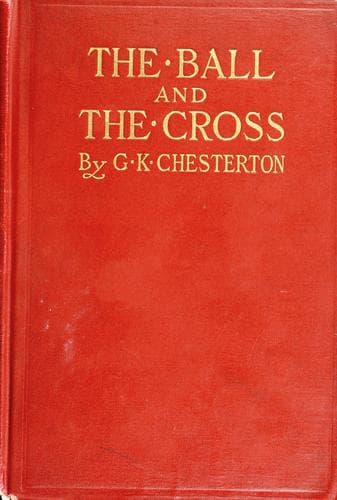
The Ball and the Cross
الكرة والصليب
Le ballon et la croix
Editorial summary
This satirical novel examines the modern secular world's discomfort with serious religious debate through the story of two men attempting to duel over the existence of God. Chesterton constructs his narrative around Evan MacIan, a devout Catholic Highlander, and James Turnbull, an atheist shopkeeper, who find themselves pursued by authorities desperate to prevent their theological combat. The work functions as both social satire and philosophical dialogue, critiquing a society that claims tolerance while suppressing genuine intellectual engagement with ultimate questions.
The novel opens with Professor Lucifer piloting a flying ship, establishing the work's allegorical framework. When MacIan encounters Turnbull's blasphemous shop window display, their confrontation escalates into a proposed duel. However, modern civilization consistently thwarts their attempts to fight, revealing society's preference for superficial peace over substantive truth-seeking. Through increasingly absurd interventions by police, magistrates, and eventually asylum doctors, Chesterton illustrates how contemporary culture pathologizes serious religious conviction and principled atheism alike.
Chesterton employs the developing friendship between his protagonists to explore the paradox that sincere believers and sincere atheists share more common ground than either shares with religious indifferentists. Their philosophical exchanges throughout their flight from authorities present sophisticated arguments on both sides, though Chesterton's Catholic sympathies emerge through MacIan's positions. The work critiques scientific materialism, moral relativism, and especially the modern tendency to treat religious questions as matters of mere preference rather than truth.
The asylum sequences in the novel's latter portion intensify Chesterton's satire of psychological reductionism and social control. By depicting various characters confined for taking religious or philosophical positions seriously, he suggests that modern secular society functions as a kind of universal asylum, enforcing conformity through medicalization of dissent. The climactic revelation of a literal conspiracy to suppress religious debate transforms social criticism into apocalyptic allegory.
This work contributes to early twentieth-century debates about secularization and religious authority by defending the rationality and importance of theological argument itself. Against both militant secularism and comfortable agnosticism, Chesterton advocates for a culture that takes religious truth-claims seriously enough to debate them vigorously. His novel demonstrates how fiction can serve as a vehicle for theological argument while critiquing the social conditions that marginalize such argument. The work anticipates later concerns about the privatization of religion and the closing of public discourse to transcendent questions.
Argument formulations engaged
Chesterton, G. K. (1909). The Ball and the Cross. Wells Gardner, Darton.
@book{the-ball-and-the-cross-1909,
  author    = {Chesterton, G. K.},
  title     = {The Ball and the Cross},
  year      = {1909},
  publisher = {Wells Gardner, Darton},
  url       = {https://god-database.com/en/works/the-ball-and-the-cross-1909}
}