
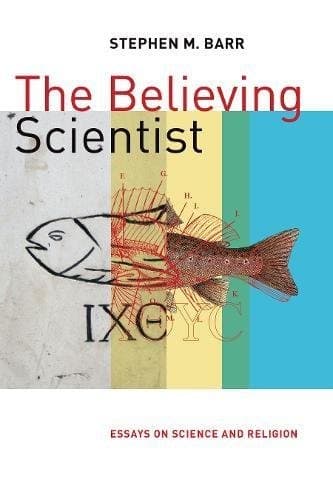
The Believing Scientist
العالم المؤمن
Le Scientifique croyant
Editorial summary
This collection of essays represents Stephen M. Barr's sustained engagement with the relationship between modern physics and theistic belief. As a theoretical particle physicist and Catholic intellectual, Barr challenges the widespread assumption that scientific advancement necessitates atheism. The work systematically examines how developments in twentieth and twenty-first century physics relate to classical theological questions about divine action, cosmic design, and human consciousness.
Barr's central argument contends that modern physics, far from excluding God, actually reopens conceptual space for theistic interpretation. He demonstrates how quantum mechanics undermines strict determinism, creating room for divine providence without violating natural laws. The essays explore how the anthropic coincidences revealed by cosmology suggest cosmic fine-tuning, though Barr carefully distinguishes this observation from simplistic design arguments. He argues that the mathematical elegance and comprehensibility of physical laws point toward a rational Creator, engaging with Eugene Wigner's famous puzzle about the "unreasonable effectiveness of mathematics" in describing nature.
The collection directly confronts prominent atheistic scientists, particularly addressing arguments from Stephen Hawking, Lawrence Krauss, and Victor Stenger. Barr critiques their philosophical overreach, arguing that they conflate methodological naturalism with metaphysical naturalism. He demonstrates how their arguments against God often rest on philosophical assumptions rather than scientific evidence. The essays particularly target the claim that quantum cosmology eliminates the need for a Creator, showing how such arguments misunderstand both the physics involved and the nature of divine causation.
Methodologically, Barr employs his expertise in theoretical physics to clarify technical concepts for non-specialists while maintaining philosophical rigor. He draws on Thomas Aquinas to distinguish between primary causation (God) and secondary causation (natural laws), arguing this framework better accommodates both scientific findings and theistic belief than either scientific materialism or intelligent design theory. The work engages seriously with the limits of scientific explanation, particularly regarding consciousness and free will.
The collection's significance lies in providing a sophisticated theistic response to scientific atheism from within the scientific community. Barr demonstrates that accepting modern physics need not entail atheism, offering theists a way to embrace scientific findings without abandoning traditional beliefs about divine action and purpose. His work challenges both scientists who see faith as anti-scientific and believers who view science as threatening to faith.
Argument formulations engaged
Related works
Barr, Stephen M. (2016). The Believing Scientist. Eerdmans.
@book{the-believing-scientist-2016,
  author    = {Barr, Stephen M.},
  title     = {The Believing Scientist},
  year      = {2016},
  publisher = {Eerdmans},
  url       = {https://god-database.com/en/works/the-believing-scientist-2016}
}