
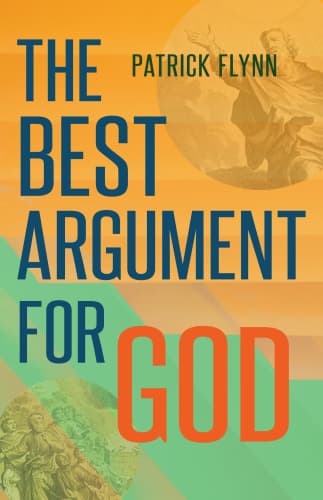
The Best Argument for God
أفضل حجة على وجود الله
Le Meilleur argument en faveur de Dieu
Patrick Flynn argues that a carefully constructed cumulative case drawing on cosmological, teleological, and ontological considerations constitutes the best available rational argument for the existence of God.
Editorial summary
Patrick Flynn's The Best Argument for God presents a comprehensive philosophical defense of theism through systematic engagement with classical and contemporary arguments for God's existence. Flynn situates his work within the tradition of analytic philosophy of religion, employing rigorous logical analysis while remaining accessible to readers without specialized training in philosophy.
The monograph's central thesis contends that cumulative case arguments provide stronger support for theism than any single argument in isolation. Flynn examines three major argument families - cosmological, ontological, and design arguments - not as independent proofs but as mutually reinforcing considerations that together constitute what he terms "the best argument for God." This methodological approach distinguishes his work from traditional natural theology, which often treats each argument as a standalone demonstration.
Flynn begins with cosmological arguments, analyzing both classical formulations from Aquinas and contemporary versions such as the Kalam cosmological argument. He addresses standard objections concerning infinite regress and the principle of sufficient reason, arguing that these objections fail to undermine the fundamental insight that contingent reality requires a necessary ground. His treatment of ontological arguments focuses particularly on modal versions developed by Alvin Plantinga and others, defending their logical validity while acknowledging ongoing debates about their soundness.
The book's examination of design arguments incorporates recent developments in physics and biology, including fine-tuning arguments and discussions of cosmic constants. Flynn engages critically with naturalistic explanations, including multiverse hypotheses, arguing that these alternatives face their own theoretical difficulties and often postpone rather than eliminate the need for ultimate explanation.
Throughout the work, Flynn responds to prominent atheistic philosophers including Graham Oppy, J.L. Mackie, and Paul Draper. He addresses the problem of divine hiddenness and argues that standard formulations of the problem of evil do not decisively count against the existence of God when properly understood within a broader evidential framework.
The monograph's significance lies not only in its defense of individual arguments but in its methodological contribution to natural theology. By advocating for a cumulative case approach, Flynn challenges both theists and atheists to move beyond piecemeal evaluations of isolated arguments. His work represents a sophisticated entry in contemporary philosophy of religion, demonstrating how traditional theistic arguments can be reformulated and defended using the tools of contemporary analytic philosophy.
Argument formulations engaged
Flynn, Patrick The Best Argument for God. Sophia Institute Press.
@book{the-best-argument-for-god,
  author    = {Flynn, Patrick},
  title     = {The Best Argument for God},
  year      = {n.d.},
  publisher = {Sophia Institute Press},
  url       = {https://god-database.com/en/works/the-best-argument-for-god}
}