
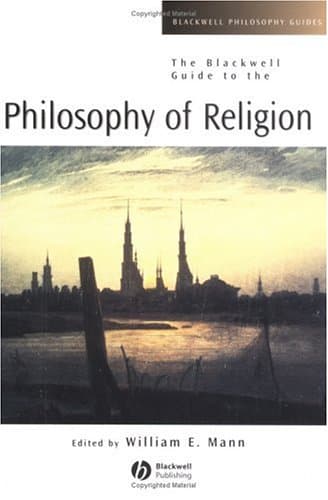
The Blackwell Guide to the Philosophy of Religion
دليل بلاكويل إلى فلسفة الدين
Le Guide Blackwell de la philosophie de la religion
A comprehensive reference guide surveying the central problems, arguments, and debates in analytic philosophy of religion, from divine attributes and theistic proofs to religious language, evil, and miracles.
Editorial summary
The Blackwell Guide to the Philosophy of Religion, edited by William E. Mann, represents a significant contribution to contemporary philosophy of religion from within the Christian analytic tradition. This comprehensive volume assembles leading scholars to examine the central arguments and methodological approaches that have shaped recent debates about God's existence and nature. Through rigorous analytic methodology, the collection provides both critical assessment and constructive development of traditional theistic arguments while engaging seriously with challenges to religious belief.
The volume's treatment of cosmological arguments demonstrates the ongoing vitality of this philosophical tradition, examining both classical formulations and contemporary refinements that address modern objections. Contributors analyze various versions including the kalam cosmological argument and arguments from contingency, showing how analytic precision can clarify traditional metaphysical claims about causation, necessity, and divine aseity. Similarly, the guide's engagement with ontological arguments reveals how modal logic and possible worlds semantics have transformed this venerable proof, moving beyond historical formulations to address contemporary concerns about conceivability and metaphysical possibility.
Design arguments receive careful attention, with contributors examining how recent developments in cosmology and fine-tuning considerations have reinvigorated teleological reasoning. The volume situates these arguments within broader debates about naturalism and theism as competing explanatory frameworks. Equally significant is the guide's treatment of the problem of evil, where analytic rigor is applied to both logical and evidential formulations. Contributors explore various theodicies and defenses, including free will defenses, soul-making theodicies, and skeptical theist responses that challenge assumptions about human epistemic limitations.
The inclusion of reformed epistemology marks the volume's engagement with influential developments in religious epistemology. Contributors examine whether belief in God can be properly basic, addressing internalist and externalist theories of justification and their implications for rational religious belief. Throughout, Mann's editorial vision ensures that while the volume operates within a broadly Christian analytic framework, it maintains philosophical rigor and engages seriously with non-theistic perspectives.
This guide serves as both a comprehensive introduction for students and a sophisticated resource for researchers. By combining historical awareness with contemporary analytic techniques, it demonstrates how traditional philosophical theology continues to evolve through engagement with current philosophical methods. The volume's strength lies in showing how analytic philosophy of religion remains a vibrant field where classical questions receive fresh treatment through methodological precision and argumentative clarity.
Argument formulations engaged
Related works
Mann, William E. The Blackwell Guide to the Philosophy of Religion. Blackwell Publishing Ltd.
@book{the-blackwell-guide-to-the-philosophy-of,
  author    = {Mann, William E.},
  title     = {The Blackwell Guide to the Philosophy of Religion},
  year      = {n.d.},
  publisher = {Blackwell Publishing Ltd},
  url       = {https://god-database.com/en/works/the-blackwell-guide-to-the-philosophy-of-religion}
}