
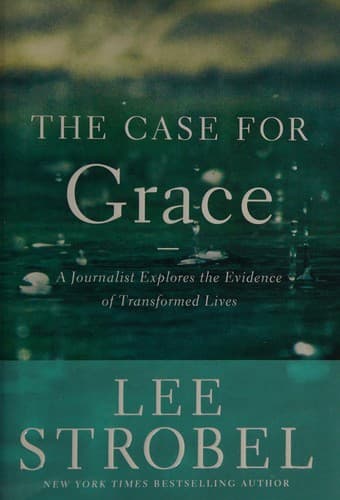
The Case for Grace
الحجة للنعمة
L'Affaire pour la grâce
Editorial summary
Lee Strobel's The Case for Grace represents a methodological departure from his previous apologetic works while maintaining his investigative journalist approach to questions of faith. Rather than marshaling evidential arguments for God's existence, this work explores the experiential dimension of divine action through contemporary narratives of personal transformation. Strobel examines how individuals interpret radical life changes as encounters with divine grace, positioning these accounts as a form of existential evidence for theistic belief.
The work employs a case-study methodology, presenting detailed interviews with individuals who attribute profound personal transformations to divine intervention. These range from stories of addiction recovery and criminal rehabilitation to accounts of forgiveness in extreme circumstances. Strobel's journalistic background shapes his presentation, as he investigates each narrative with attention to corroborating details while allowing subjects to articulate their own theological interpretations of their experiences.
Philosophically, the text engages with the problem of religious experience as evidence for God's existence. While traditional natural theology argues from cosmological or teleological grounds, Strobel's approach aligns more closely with reformed epistemology's emphasis on the proper basicality of belief grounded in experience. The work implicitly challenges naturalistic explanations of conversion experiences, though it does not systematically engage with psychological or sociological accounts of religious transformation.
The book's contribution to contemporary God debates lies primarily in its popular accessibility rather than philosophical rigor. Strobel bridges academic discussions of religious experience with vernacular spirituality, translating concepts like divine grace into concrete narratives. This approach resonates with William James's empirical study of religious experience, though without James's psychological sophistication or phenomenological precision.
Critics might note that the work's evidentiary value depends entirely on accepting the subjects' interpretations of their experiences as veridical encounters with the divine. The selection of cases appears guided by their dramatic nature rather than representative sampling, potentially limiting their apologetic force. Nevertheless, the text provides valuable data for scholars studying contemporary lived religion and the persistence of grace language in modern spiritual discourse.
The work functions less as philosophical argumentation than as rhetorical persuasion, using narrative to make theistic belief plausible within a cultural context often skeptical of traditional proofs. Its significance lies in documenting how modern individuals conceptualize divine action and in demonstrating the continued relevance of grace as a theological category in popular religious consciousness.
Argument formulations engaged
Related works
Strobel, Lee (2015). The Case for Grace. Zondervan.
@book{the-case-for-grace-2015,
  author    = {Strobel, Lee},
  title     = {The Case for Grace},
  year      = {2015},
  publisher = {Zondervan},
  url       = {https://god-database.com/en/works/the-case-for-grace-2015}
}