
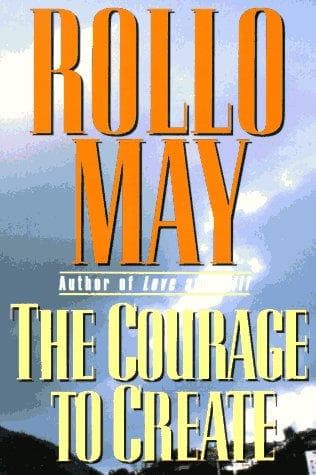
The Courage to Create
شجاعة الإبداع
Le Courage de créer
Editorial summary
This seminal work by existential psychologist Rollo May explores the creative process as a fundamental aspect of human existence and spiritual encounter. May argues that authentic creativity requires courage precisely because it involves confronting the void, engaging with non-being, and bringing forth new forms of being—processes that inherently touch upon ultimate questions about existence, meaning, and transcendence.
May develops his thesis through phenomenological analysis of creative experiences across artistic, scientific, and interpersonal domains. He contends that the creative act represents more than mere self-expression or problem-solving; it constitutes an encounter with Being itself. Drawing on Tillich's concept of the "God above God," May suggests that creativity involves meeting what he terms the "depths of being" where traditional categories of theism and atheism become inadequate. The creative person must possess the courage to move beyond conventional religious and secular frameworks into direct confrontation with existence's fundamental mystery.
The work engages critically with both reductionist psychological theories that explain creativity through sublimation or neurosis, and traditional religious accounts that attribute creative inspiration to divine intervention. May proposes instead that creativity emerges from the human capacity to participate in being's self-disclosure—a process requiring existential courage because it demands encountering anxiety, meaninglessness, and the possibility of non-being. This encounter, he argues, reveals dimensions of reality that transcend the theism-atheism debate while acknowledging the profound spiritual significance of creative experience.
May's contribution lies in articulating how creativity serves as a unique window into questions about ultimate reality without requiring commitment to traditional theistic or atheistic positions. His analysis suggests that the creative process itself constitutes a form of revelation—not of a personal deity but of being's dynamic self-manifestation through human consciousness. This perspective offers a middle path between religious and secular worldviews by locating the sacred within the creative act rather than in supernatural intervention or material processes alone.
The work's significance for the God debate resides in its demonstration that profound spiritual questions arise naturally within psychological investigation of creativity. May shows how the courage required for authentic creation parallels the courage needed for genuine theological inquiry—both demand openness to mystery, tolerance for ambiguity, and willingness to transcend established categories. His work thus contributes to post-theistic spiritual discourse while maintaining respect for the existential depths that traditional God-language attempts to address.
Argument formulations engaged
May, Rollo (1975). The Courage to Create. W. W. Norton & Company.
@book{the-courage-to-create-1975,
  author    = {May, Rollo},
  title     = {The Courage to Create},
  year      = {1975},
  publisher = {W. W. Norton & Company},
  url       = {https://god-database.com/en/works/the-courage-to-create-1975}
}