
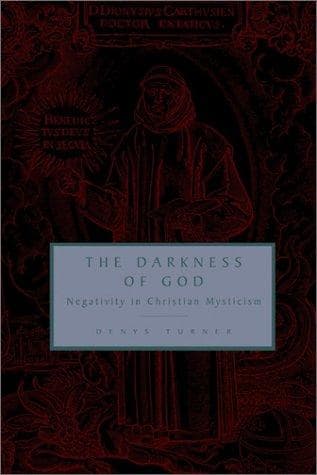
The Darkness of God.. Negativity in Christian Mysticism
ظلمة الله.. السلبية في التصوف المسيحي
Les ténèbres de Dieu.. La négativité dans la mystique chrétienne
The apophatic tradition in Christian mysticism — from Pseudo-Dionysius to Meister Eckhart — does not represent a retreat from rational theology but a rigorous intellectual discipline that exposes the limits of all positive predication about God.
Editorial summary
This monograph examines the role of negativity and apophatic theology in the Christian mystical tradition, tracing how the concept of divine darkness functions as both a theological principle and experiential category from late antiquity through the medieval period. Turner investigates the paradoxical notion that God is best approached through negation, unknowing, and the systematic denial of all positive attributes - a tradition reaching from Pseudo-Dionysius through Meister Eckhart to John of the Cross.
The work challenges contemporary assumptions about mysticism as primarily concerned with extraordinary experiences or states of consciousness. Turner argues that classical Christian mysticism, properly understood, centers not on special experiences of God but on the collapse of the very distinction between experience and its absence. The "darkness of God" refers not to a peculiar religious experience but to the failure of all experiential categories when applied to the divine. This reading recovers what Turner sees as authentic apophaticism against modern psychological and experiential interpretations of mystical texts.
Through careful intellectual history, Turner traces how negative theology developed from Neoplatonic sources into a sophisticated Christian theological method. He examines how figures like Gregory of Nyssa, Pseudo-Dionysius, and Thomas Aquinas employed negation not as mere skepticism about religious language but as a disciplined approach to divine transcendence. The medieval synthesis, particularly in Aquinas, maintains both kataphatic (positive) and apophatic (negative) dimensions in creative tension, neither reducing God to human concepts nor abandoning theological discourse entirely.
The study engages critically with modern interpreters who have either psychologized mystical negation or dismissed it as incoherent. Turner demonstrates how apophatic theology operates according to its own rigorous logic, one that pushes language to its limits precisely to indicate what transcends those limits. His analysis shows how the prophetic dimension of mystical texts lies not in claiming special revelations but in their radical critique of idolatrous tendencies in all God-talk, including their own.
This historical and philosophical investigation contributes to contemporary debates about religious language, experience, and the possibilities of theology after onto-theology. By recovering the intellectual sophistication of negative theology, Turner provides resources for understanding how classical Christian thought navigated between rationalism and fideism, maintaining divine transcendence while avoiding mere agnosticism about religious truth claims.
Structured analysis
Argument formulations engaged
Turner, Denys (2010). The Darkness of God.. Negativity in Christian Mysticism.
@book{the-darkness-of-god-negativity-in-christ,
  author    = {Turner, Denys},
  title     = {The Darkness of God.. Negativity in Christian Mysticism},
  year      = {2010},
  url       = {https://god-database.com/en/works/the-darkness-of-god-negativity-in-christian-mysticism}
}