
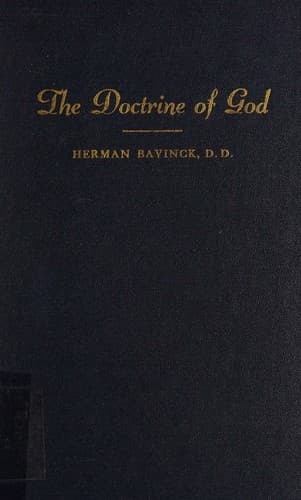
The Doctrine of God
عقيدة الله
La Doctrine de Dieu
Editorial summary
Herman Bavinck's The Doctrine of God stands as a monumental contribution to Reformed systematic theology, offering a comprehensive exposition of the divine nature and attributes from within the Dutch neo-Calvinist tradition. Written during a period of intense theological upheaval in late nineteenth-century Europe, the work responds to the challenges posed by modernist theology, German idealism, and historical criticism while maintaining firm grounding in classical Reformed orthodoxy.
Bavinck develops his doctrine through rigorous engagement with the entire Western theological tradition, from patristic sources through medieval scholasticism to contemporary Protestant thought. His method combines historical theological analysis with philosophical argumentation, demonstrating particular facility in addressing the epistemological questions raised by Kant and the speculative systems of Hegel and Schelling. Against the immanentist tendencies of liberal theology, Bavinck argues for both the transcendence and knowability of God, grounding divine revelation in Scripture while acknowledging the legitimate role of natural theology.
The work's distinctive contribution lies in its organic and synthetic approach to divine attributes. Rather than constructing abstract categorical divisions between communicable and incommunicable attributes, Bavinck presents God's perfections as a unified whole, each attribute reflecting the fullness of the divine essence. He carefully navigates between the Scylla of anthropomorphism and the Charybdis of agnosticism, arguing that human knowledge of God, while analogical and limited, remains true and reliable because grounded in God's own self-disclosure.
Particularly significant is Bavinck's treatment of the Trinity, where he advances beyond mere restatement of classical formulations to engage contemporary philosophical concerns about personality and self-consciousness. His discussion integrates insights from modern psychology and personalist philosophy while maintaining fidelity to Nicene orthodoxy. Throughout, Bavinck demonstrates how the doctrine of God functions as the cornerstone of all theological reflection, with implications for anthropology, soteriology, and ethics.
The work's enduring influence stems from its remarkable balance of confessional commitment and intellectual breadth. Bavinck neither retreats into theological isolationism nor capitulates to modernist reductionism. Instead, he models a form of orthodox engagement that takes seriously both the claims of Christian revelation and the legitimate insights of modern thought. His sophisticated treatment of divine simplicity, the relationship between essence and attributes, and the knowability of God continues to inform contemporary debates in philosophical theology.
Argument formulations engaged
Bavinck, Herman (1895). The Doctrine of God. Lexham Press.
@book{the-doctrine-of-god-1895,
  author    = {Bavinck, Herman},
  title     = {The Doctrine of God},
  year      = {1895},
  publisher = {Lexham Press},
  url       = {https://god-database.com/en/works/the-doctrine-of-god-1895}
}