
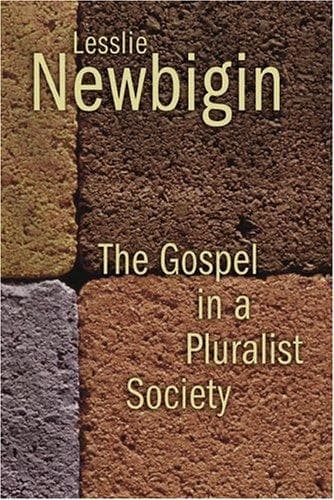
The Gospel in a Pluralist Society
الإنجيل في مجتمع تعددي
L'Évangile dans une société pluraliste
Editorial summary
Lesslie Newbigin's The Gospel in a Pluralist Society addresses the challenge of Christian truth claims in the context of modern Western pluralism. Writing as a missionary theologian who spent decades in India before returning to Britain, Newbigin confronts the widespread assumption that religious beliefs belong to the private sphere of values while public discourse must restrict itself to supposedly neutral facts. He argues that this fact-value dichotomy, rooted in Enlightenment epistemology, undermines the possibility of making universal truth claims about God and ultimate reality.
The work develops a sophisticated critique of the modern Western "plausibility structure" that marginalizes religious knowledge. Newbigin contends that all human knowledge, including scientific knowledge, depends on faith commitments and participates in particular traditions of inquiry. He challenges the notion that secular reason provides a neutral standpoint from which to adjudicate religious claims, arguing instead that the Enlightenment project itself rests on unexamined assumptions about the nature of reality and human knowing.
Central to Newbigin's argument is his claim that the gospel presents a public truth about history's meaning and direction, centered on God's self-revelation in Jesus Christ. He maintains that Christianity offers not merely one perspective among others, but a comprehensive account of reality that challenges both religious pluralism and secular naturalism. The work engages critically with philosophers like Michael Polanyi and Alasdair MacIntyre to develop an epistemology that acknowledges the fiduciary (faith-based) component in all knowledge while maintaining the possibility of genuine truth claims.
Newbigin addresses the theological implications of cultural pluralism without retreating into relativism or fundamentalism. He argues for a missionary encounter between the gospel and culture that takes seriously both the particularity of Christian revelation and the legitimate insights of other traditions. The work particularly challenges Western churches to recognize how deeply they have accommodated to post-Enlightenment assumptions that privatize faith and exclude God from public truth.
The Gospel in a Pluralist Society significantly influenced subsequent discussions about Christianity's public role, the relationship between faith and reason, and the possibility of religious knowledge in pluralistic contexts. Newbigin's post-colonial perspective and critique of Western epistemological assumptions opened new avenues for understanding how claims about God function in contemporary intellectual discourse.
Argument formulations engaged
Newbigin, Lesslie (1989). The Gospel in a Pluralist Society. Eerdmans.
@book{the-gospel-in-a-pluralist-society-1989,
  author    = {Newbigin, Lesslie},
  title     = {The Gospel in a Pluralist Society},
  year      = {1989},
  publisher = {Eerdmans},
  url       = {https://god-database.com/en/works/the-gospel-in-a-pluralist-society-1989}
}