
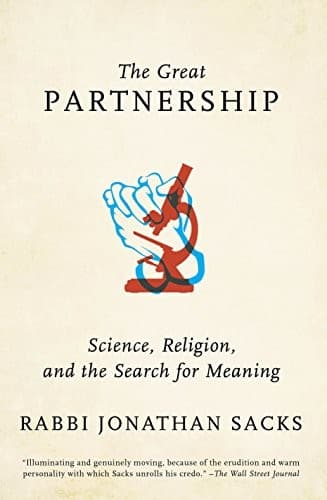
The Great Partnership.. God, Science and the Search for meaning
الشراكة العظمى.. الله، والعلم، والبحث عن المعنى
Le grand partenariat.. Dieu, la science et la quête du sens
Science and religion are not rivals but complementary modes of inquiry — science explains how the universe works while religion addresses why we are here — and the world needs both to achieve genuine understanding.
Editorial summary
This monograph presents a comprehensive philosophical-theological defense of religious belief in dialogue with contemporary scientific understanding. The work argues that science and religion, rather than being incompatible worldviews locked in perpetual conflict, represent complementary approaches to understanding reality that address fundamentally different questions. Where science asks "how," religion asks "why"; where science seeks explanation, religion provides meaning; where science offers description, religion presents purpose.
The author engages extensively with the science-and-religion debate, challenging the prevalent narrative of inevitable conflict between scientific and religious worldviews. Drawing on Jewish philosophical traditions while maintaining broad applicability across religious contexts, the work contends that the perceived opposition between science and faith stems from category errors on both sides. Scientific materialism errs in claiming that empirical methodology can address all meaningful questions, while religious fundamentalism mistakes ancient texts for scientific treatises. The monograph argues that properly understood, science and religion operate in distinct but mutually enriching domains.
Central to the argument is a critique of reductionist atheism that claims scientific progress necessarily displaces religious belief. The author maintains that meaning, purpose, morality, and human dignity cannot be derived from scientific description alone. While acknowledging religion's historical failures and the legitimacy of many critiques, the work argues these do not negate religion's essential role in human flourishing. The partnership metaphor suggests that just as human relationships require both rational analysis and emotional commitment, human understanding requires both scientific investigation and religious wisdom.
The philosophical-theological methodology employed draws on both analytic philosophy and traditional Jewish thought to construct bridges between ancient wisdom and contemporary challenges. The work engages seriously with critiques of religion while defending a sophisticated theism that embraces scientific discovery as deepening rather than threatening religious understanding. By reframing the science-religion relationship from conflict to partnership, the monograph offers a constructive approach to one of modernity's most divisive intellectual debates. The argument's significance lies in its potential to move beyond simplistic dichotomies, proposing instead a nuanced integration that preserves the integrity and importance of both scientific and religious ways of knowing.
Structured analysis
Argument formulations engaged
Sacks, Jonathan (2011). The Great Partnership.. God, Science and the Search for meaning.
@book{the-great-partnership-god-science-and-th,
  author    = {Sacks, Jonathan},
  title     = {The Great Partnership.. God, Science and the Search for meaning},
  year      = {2011},
  url       = {https://god-database.com/en/works/the-great-partnership-god-science-and-the-search-for-meaning}
}