
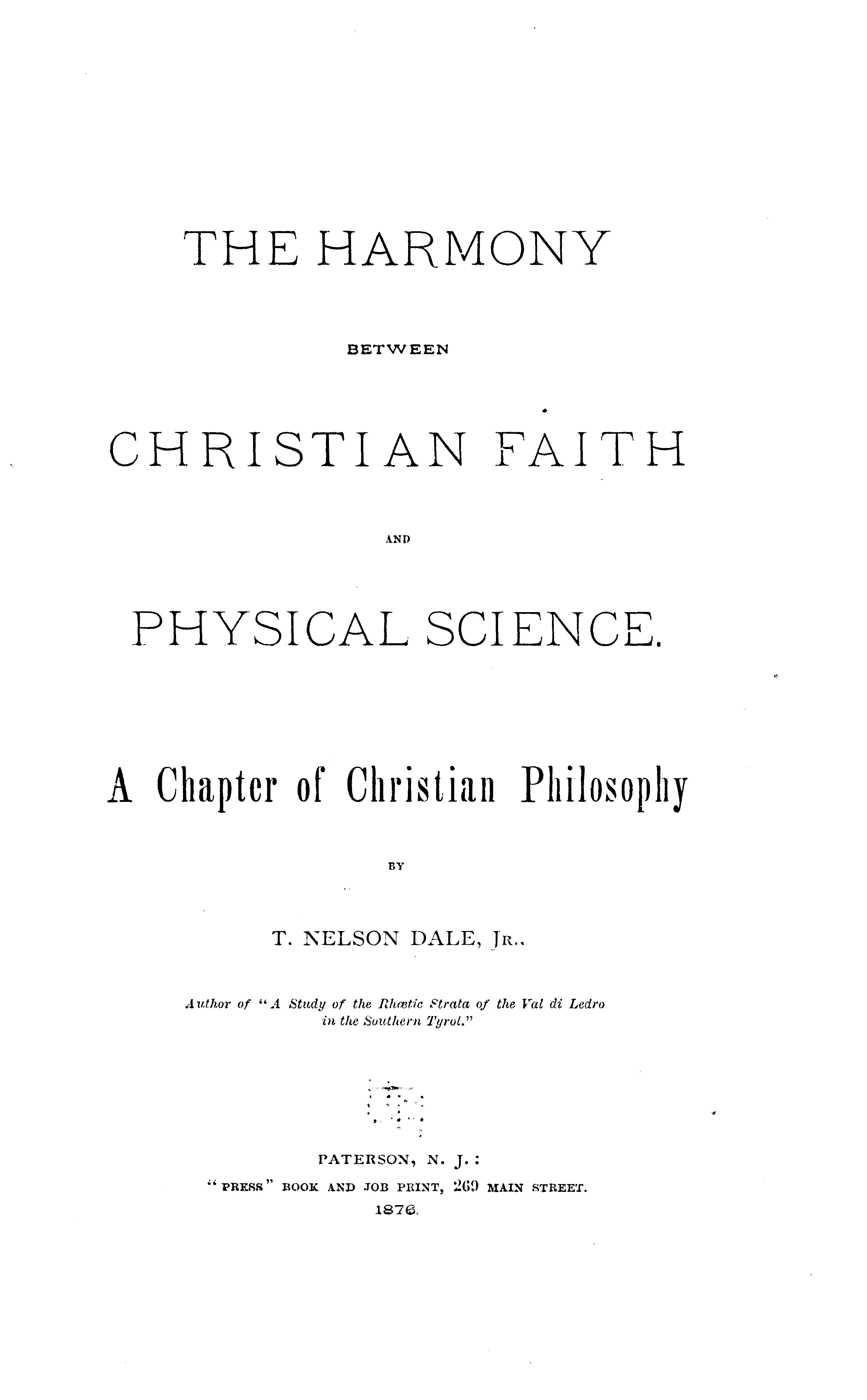
The Harmony Between Christian Faith And Physical Science
الانسجام بين الإيمان المسيحي والعلوم الطبيعية
L'Harmonie entre la foi chrétienne et la science physique
Christian faith and physical science are not in fundamental conflict but point toward a coherent and mutually reinforcing understanding of reality.
Editorial summary
T. Nelson Dale's monograph examines the compatibility between Christian belief and modern physical science, offering an apologetic synthesis that argues for their fundamental harmony rather than conflict. Writing in 1970, Dale engages with the widespread perception of tension between scientific and religious worldviews, particularly addressing secular critics who view Christianity as intellectually incompatible with scientific progress.
The work employs two primary argumentative strategies to establish its theistic position. First, Dale develops a version of the design argument, drawing on contemporary physics and cosmology to suggest that the ordered structure of the universe points toward divine intelligence. He examines specific examples from atomic physics, thermodynamics, and astronomy, arguing that the mathematical elegance and fine-tuning evident in physical laws resist purely naturalistic explanation. This approach situates Dale within the tradition of natural theology while incorporating twentieth-century scientific discoveries that earlier design arguments could not address.
Second, Dale constructs a cumulative case argument that weaves together multiple lines of evidence from the physical sciences. Rather than resting his case on any single scientific finding, he builds a comprehensive picture suggesting that the totality of scientific knowledge coheres better with Christian theism than with materialist alternatives. This methodological choice reflects the influence of analytic philosophy on Christian apologetics during this period, emphasizing careful argumentation and logical rigor over purely theological assertion.
Dale's intellectual context shapes his approach significantly. Writing during a period of renewed dialogue between science and religion following decades of perceived conflict, he addresses both Christian audiences concerned about scientific challenges to faith and scientific communities skeptical of religious claims. His work responds implicitly to logical positivism's decline and the growing recognition among philosophers of science that scientific practice involves metaphysical commitments.
The monograph's contribution lies in its systematic attempt to demonstrate not merely the absence of conflict between Christianity and physical science, but their positive mutual reinforcement. Dale argues that Christian theism provides a coherent metaphysical framework that makes the success of physical science intelligible, while scientific discoveries reveal a cosmos bearing marks of divine wisdom. This bidirectional argument distinguishes his work from defensive apologetics that merely seek to protect faith from scientific critique, instead proposing that Christian belief enhances scientific understanding.
Structured analysis
Argument formulations engaged
Dale, T. Nelson (1970). The Harmony Between Christian Faith And Physical Science.
@book{the-harmony-between-christian-faith-and-,
  author    = {Dale, T. Nelson},
  title     = {The Harmony Between Christian Faith And Physical Science},
  year      = {1970},
  url       = {https://god-database.com/en/works/the-harmony-between-christian-faith-and-physical-science}
}