
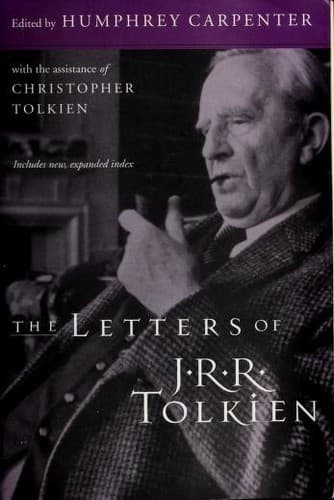
The Letters of J.R.R. Tolkien
رسائل ج.ر.ر. تولكين
Les Lettres de J.R.R. Tolkien
Editorial summary
The Letters of J.R.R. Tolkien provides remarkable insight into the theological dimensions of one of the 20th century's most influential creative minds. This collection, spanning from 1914 to 1973, reveals Tolkien as a deeply committed Roman Catholic whose faith fundamentally shaped his literary imagination and philosophical outlook. While primarily known for The Lord of the Rings and The Hobbit, these letters demonstrate that Tolkien's fantasy works emerge from and express a coherent theistic worldview.
Throughout the correspondence, Tolkien articulates a sophisticated understanding of divine providence, human nature, and the relationship between faith and artistic creation. He explicitly rejects allegorical readings of his fiction while simultaneously affirming that his work is "fundamentally religious and Catholic." This apparent paradox dissolves when one grasps Tolkien's concept of "sub-creation" - the idea that human creative acts participate in and reflect divine creativity. For Tolkien, the artist does not merely illustrate religious truths but rather discovers them through the imaginative process itself.
The letters reveal Tolkien's engagement with theodicy, particularly through his reflections on suffering, death, and what he terms "the long defeat" of history. Against modernist optimism, he maintains that evil is real and powerful, yet ultimately subordinate to divine providence. His treatment of mercy, sacrifice, and eucatastrophe (the "good catastrophe" of unexpected salvation) in his fiction emerges from this theological framework. Tolkien's correspondence with C.S. Lewis and others shows him defending traditional Christian doctrine while exploring its implications through mythopoeic imagination.
Significantly, Tolkien's letters challenge both secular readings of fantasy literature and narrow conceptions of religious art. He demonstrates how orthodox Christian belief can generate rather than constrain imaginative freedom. His discussions of elvish immortality, the nature of evil, and the theological significance of beauty reveal a thinker who views metaphysical questions as inseparable from aesthetic ones.
The collection contributes to contemporary debates about faith and literature by presenting a model of integration rather than separation. Tolkien neither compartmentalizes his religious convictions nor reduces his art to propaganda. Instead, he exemplifies how theistic belief can inform a creative vision that speaks to universal human concerns while remaining grounded in particular theological commitments.
Argument formulations engaged
Tolkien, J. R. R. (1981). The Letters of J.R.R. Tolkien.
@book{the-letters-of-j-r-r-tolkien-1981,
  author    = {Tolkien, J. R. R.},
  title     = {The Letters of J.R.R. Tolkien},
  year      = {1981},
  url       = {https://god-database.com/en/works/the-letters-of-j-r-r-tolkien-1981}
}