
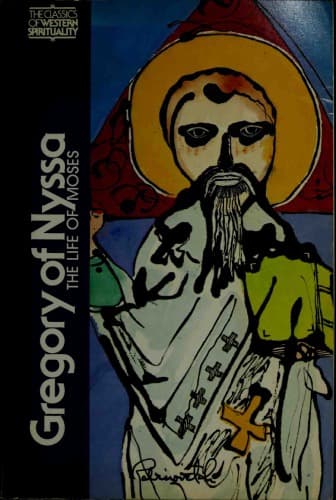
The Life of Moses
حياة موسى
La Vie de Moïse
Editorial summary
Gregory of Nyssa's "The Life of Moses" presents a sophisticated allegorical interpretation of the biblical narrative that transforms Moses into a paradigm of spiritual ascent toward divine union. Written around 380 CE during the height of Cappadocian theological development, this work represents Gregory's mature reflection on the nature of God and humanity's relationship to the divine. The treatise operates on two levels: a literal retelling of Moses' life followed by a spiritual interpretation that reveals the deeper significance of each episode for Christian contemplation.
Gregory employs the concept of epektasis, or perpetual progress, to argue that the soul's journey toward God involves infinite growth without ever reaching a final terminus. Moses' ascent of Mount Sinai becomes emblematic of this endless spiritual advancement, where each stage of knowledge leads to greater divine darkness rather than clarity. This apophatic dimension distinguishes Gregory's approach from more kataphatic contemporary theologies. He contends that God's infinity means human beings can never fully comprehend the divine essence, yet this limitation paradoxically enables eternal progress in virtue and knowledge.
The work engages critically with both Origenist intellectualism and crude anthropomorphism, positioning itself within debates about divine incomprehensibility that would shape Eastern Christian mysticism. Gregory's Moses encounters God not through static contemplation but through dynamic movement, suggesting that virtue consists in constant transformation rather than achievement of a fixed state. This processual understanding of perfection challenges Platonic notions of immutable forms while maintaining commitment to divine transcendence.
Methodologically, Gregory combines biblical exegesis with philosophical speculation, drawing on Middle Platonic and Stoic sources while remaining grounded in scriptural narrative. His allegorical reading transforms historical events into universal spiritual principles without dissolving their concrete particularity. The darkness Moses enters on Sinai becomes a metaphor for apophatic theology itself, where negation leads to truer affirmation of divine reality.
Gregory's contribution lies in articulating a distinctly Christian understanding of mystical ascent that preserves both divine transcendence and human transformation. His influence extends through Pseudo-Dionysius to later Byzantine theology and Western mysticism. The work remains significant for demonstrating how narrative theology can address fundamental metaphysical questions about divine nature and human destiny while maintaining fidelity to biblical sources.
Argument formulations engaged
Nyssa, Gregory of (380). The Life of Moses. Paulist Press.
@book{the-life-of-moses-380,
  author    = {Nyssa, Gregory of},
  title     = {The Life of Moses},
  year      = {380},
  publisher = {Paulist Press},
  url       = {https://god-database.com/en/works/the-life-of-moses-380}
}