
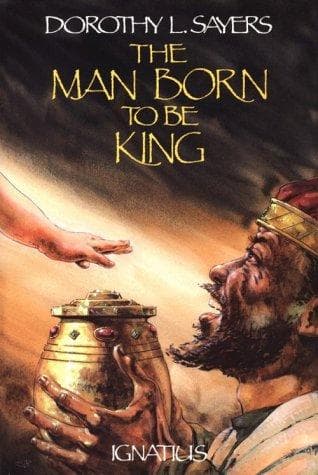
The Man Born to Be King
الرجل المولود ليكون ملكاً
L'Homme né pour être Roi
Editorial summary
Dorothy L. Sayers's "The Man Born to Be King" represents a significant intervention in mid-20th century theological discourse through its dramatization of the Gospel narratives for BBC radio. Written between 1941 and 1942 as a cycle of twelve plays, the work emerges from wartime Britain's cultural and spiritual anxieties while engaging broader questions about divine incarnation, human nature, and the accessibility of religious truth through artistic representation.
Sayers approaches the figure of Christ through what she terms "realistic" dramatic technique, deliberately presenting Jesus and his disciples speaking colloquial English rather than the archaic language of the King James Bible. This methodological choice reflects her theological conviction that the incarnation demands God be understood as fully entering human history and experience. The plays thus function as both popular entertainment and sophisticated theological argument, asserting that divine truth manifests most powerfully through concrete human particularity rather than abstract doctrine.
The work engages critically with two dominant tendencies in contemporary Christianity: the "gentle Jesus" sentimentalism of liberal Protestantism and the disembodied spiritualism that divorces faith from material existence. Against these positions, Sayers presents a robustly incarnational theology emphasizing the scandal of God becoming flesh. Her dramatization highlights the political dimensions of Jesus's ministry, the social dynamics of first-century Palestine, and the psychological complexity of both disciples and antagonists, thereby challenging reductionist readings of the Gospel narratives.
Sayers's contribution to natural theology operates through her aesthetic theory, developed in parallel essays, which argues that human creative activity participates analogically in divine creation. The plays themselves embody this principle, suggesting that dramatic art can serve as a vehicle for theological truth precisely because human imagination reflects the imago Dei. This positions her work against both fundamentalist biblicism, which restricts divine revelation to scriptural text, and modernist skepticism, which relegates religious narrative to primitive mythology.
The cultural impact of "The Man Born to Be King" extends beyond its original broadcast context. By demonstrating how traditional Christian narrative could speak meaningfully to contemporary audiences, Sayers's work influences subsequent developments in narrative theology and the dramatic presentation of religious themes. Her integration of scholarly biblical research with popular dramatic form establishes a model for public theology that neither compromises intellectual rigor nor retreats into academic isolation, thereby contributing significantly to debates about religious communication in secular modernity.
Argument formulations engaged
Sayers, Dorothy L. (1943). The Man Born to Be King. Harper & Brothers.
@book{the-man-born-to-be-king-1943,
  author    = {Sayers, Dorothy L.},
  title     = {The Man Born to Be King},
  year      = {1943},
  publisher = {Harper & Brothers},
  url       = {https://god-database.com/en/works/the-man-born-to-be-king-1943}
}