
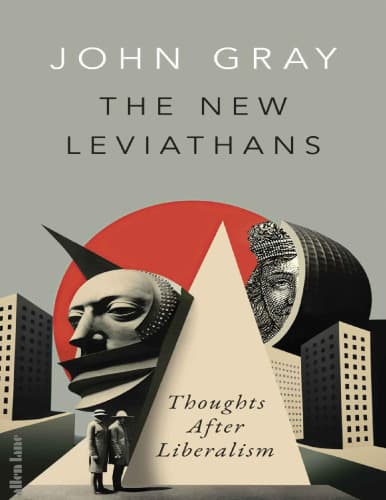
The New Leviathans: Thoughts After Liberalism
اللوياثان الجديد: أفكار ما بعد الليبرالية
Les Nouveaux Léviathans : Réflexions Après le Libéralisme
Editorial summary
This monograph examines the collapse of liberal universalism and its replacement by competing authoritarian systems, offering implications for how contemporary societies conceptualize ultimate authority and meaning. Gray argues that the post-Cold War assumption of inevitable liberal democratic convergence has given way to a multipolar world of "new Leviathans" - powerful states that reject Western liberalism while embracing different forms of authoritarian governance. His analysis challenges the secular eschatology implicit in liberal progressivism, suggesting that hopes for a universal civilization based on Enlightenment values represent a quasi-religious faith rather than rational expectation.
Gray traces how liberal societies themselves have abandoned core liberal principles, implementing unprecedented surveillance systems and restrictions on speech that mirror authoritarian practices. He contends that liberalism's internal contradictions - particularly its simultaneous commitment to individual autonomy and social progress - have rendered it incapable of addressing contemporary challenges. The work examines how China, Russia, and other powers have developed alternative modernities that combine technological advancement with explicit rejection of liberal metaphysics.
The philosophical significance lies in Gray's critique of liberalism as a secular religion that replaced traditional theodicy with faith in historical progress. He argues that liberal universalism represents a Christian heresy, translating salvation history into political terms while maintaining essentially theological assumptions about human perfectibility and historical teleology. This analysis builds on his earlier works examining the religious roots of modern political ideologies, but extends the critique to address liberalism's practical failure as a governing philosophy.
Gray's method combines historical analysis with philosophical critique, drawing on sources from ancient political philosophy to contemporary geopolitics. He positions his argument against both liberal triumphalists who maintain faith in universal convergence and conservative nostalgists who seek to restore previous orders. The work suggests that attempts to ground political authority in purely secular, rational foundations inevitably fail, as societies require shared myths and meaning structures that transcend instrumental reason.
The monograph's contribution to debates about transcendence centers on its claim that political orders necessarily rest on pre-rational commitments about value and meaning. Gray implies that the death of liberal universalism reveals the persistence of the theological-political problem - the inability to fully separate questions of ultimate authority from governance. His analysis suggests that future political arrangements will openly acknowledge their particular, non-universal foundations rather than claiming rational necessity.
Argument formulations engaged
Gray, John (2023). The New Leviathans: Thoughts After Liberalism. Allen Lane.
@book{the-new-leviathans-thoughts-after-libera,
  author    = {Gray, John},
  title     = {The New Leviathans: Thoughts After Liberalism},
  year      = {2023},
  publisher = {Allen Lane},
  url       = {https://god-database.com/en/works/the-new-leviathans-thoughts-after-liberalism-2023}
}