
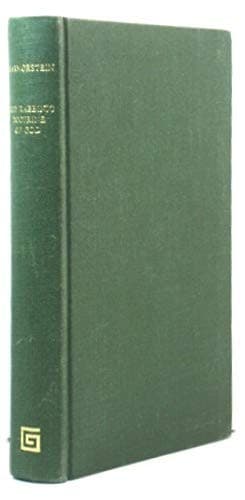
The old Rabbinic doctrine of God, Volume 1
العقيدة الحاخامية القديمة في الله، المجلد الأول
L'ancienne doctrine rabbinique de Dieu, volume 1
The rabbinic literature of late antiquity contains a rich and coherent doctrine of God that can be systematically reconstructed from its names, attributes, and theological categories.
Editorial summary
Arthur Marmorstein's pioneering study examines the theological conceptions of God within rabbinic Judaism from the Tannaitic period through the early medieval era. Drawing upon extensive textual analysis of Talmudic literature, midrashic collections, and other rabbinic sources, Marmorstein reconstructs the complex theological landscape of post-biblical Jewish thought, particularly focusing on divine attributes, names, and the relationship between transcendent and immanent aspects of the deity.
The work challenges prevailing early twentieth-century assumptions about rabbinic theology, particularly the notion that rabbinic Judaism represented a decline from biblical monotheism into anthropomorphic primitivism. Marmorstein demonstrates that rabbinic thinkers developed sophisticated theological concepts that balanced divine transcendence with accessibility, addressing perennial tensions in theistic thought. His analysis reveals how the rabbis employed various divine names and attributes not as mere linguistic variations but as theological tools for expressing different aspects of divine nature and activity.
Central to Marmorstein's methodology is his careful philological examination of rabbinic terminology for God, tracing the historical development and contextual usage of terms such as Shekhinah (divine presence), Makom (the Place), and Ha-Kadosh Barukh Hu (the Holy One, Blessed Be He). He shows how these concepts evolved in response to both internal Jewish theological concerns and external pressures from Hellenistic philosophy and early Christianity. The work particularly illuminates how rabbinic thought navigated between affirming divine involvement in human affairs while maintaining strict monotheistic principles.
Marmorstein's contribution to the broader God debate lies in his demonstration that rabbinic Judaism produced a distinctive theological tradition that differs from both philosophical monotheism and biblical anthropomorphism. His work provides essential historical context for understanding how one major religious tradition conceptualized divinity during a formative period, offering insights into the dynamic relationship between scriptural interpretation, liturgical practice, and theological speculation. The study remains influential for scholars examining the development of Jewish theology and for comparative approaches to understanding how different religious traditions have articulated concepts of divine nature. By presenting rabbinic theology as a coherent system rather than a collection of scattered sayings, Marmorstein establishes the rabbis as serious theological thinkers whose contributions merit attention in broader discussions of theistic thought.
Structured analysis
Argument formulations engaged
Marmorstein, Arthur (1927). The old Rabbinic doctrine of God, Volume 1.
@book{the-old-rabbinic-doctrine-of-god-volume-,
  author    = {Marmorstein, Arthur},
  title     = {The old Rabbinic doctrine of God, Volume 1},
  year      = {1927},
  url       = {https://god-database.com/en/works/the-old-rabbinic-doctrine-of-god-volume-1}
}