
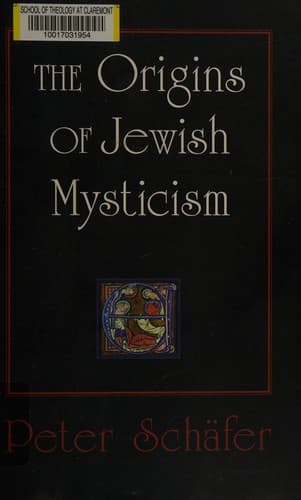
The Origins of Jewish Mysticism
أصول التصوف اليهودي
Les Origines de la mystique juive
Editorial summary
This comprehensive monograph examines the formative period of Jewish mystical traditions, tracing their development from Second Temple Judaism through the early rabbinic era. Schafer challenges conventional scholarly narratives that posit a clear rupture between apocalyptic literature and later mystical texts, arguing instead for substantial continuities in cosmological speculation and visionary practices. The work systematically analyzes key textual corpora including 1 Enoch, the Qumran materials, hekhalot literature, and early rabbinic sources to demonstrate how divine throne visions, angelology, and concepts of heavenly ascent evolved within changing historical contexts.
The study's central contribution lies in its methodological sophistication, employing both phenomenological analysis and historical-critical approaches to map the transformation of Jewish esotericism. Schafer argues that mystical traditions emerged not as reactions against rationalist tendencies but as integral components of Jewish religious expression from the Hellenistic period onward. He traces how Second Temple apocalypticism's emphasis on revealed cosmological knowledge metamorphosed into the rabbinic period's more ritualized forms of mystical praxis, while maintaining core concerns with divine accessibility and cosmic structure.
Particularly significant is Schafer's treatment of the relationship between mysticism and normative rabbinic Judaism. Against scholars who marginalize mystical traditions as sectarian phenomena, he demonstrates their embeddedness within mainstream religious frameworks, showing how prominent rabbis engaged in merkavah speculation and transmitted esoteric teachings. The work illuminates how mystical texts encode specific theological positions regarding divine transcendence and immanence, the nature of revelation, and humanity's capacity for experiencing the divine realm.
The monograph's implications for understanding Jewish conceptions of God prove substantial. Schafer reveals how mystical literature preserves complex negotiations between divine otherness and accessibility, presenting sophisticated models of mediated divine encounter through angelomorphic figures and graduated heavenly realms. These texts articulate distinctive solutions to perennial theological problems concerning divine knowledge, presence, and human-divine relations that shaped subsequent Jewish thought.
Through meticulous textual analysis and attention to social contexts, Schafer constructs a nuanced account of early Jewish mysticism's emergence that revises standard periodizations and challenges artificial distinctions between mystical and non-mystical forms of Judaism. His work establishes mysticism as a continuous strand within Jewish tradition that fundamentally shaped its theological development and conceptions of divine-human interaction.
Argument formulations engaged
Schafer, Peter (2009). The Origins of Jewish Mysticism. Princeton University Press.
@book{the-origins-of-jewish-mysticism-2009,
  author    = {Schafer, Peter},
  title     = {The Origins of Jewish Mysticism},
  year      = {2009},
  publisher = {Princeton University Press},
  url       = {https://god-database.com/en/works/the-origins-of-jewish-mysticism-2009}
}