
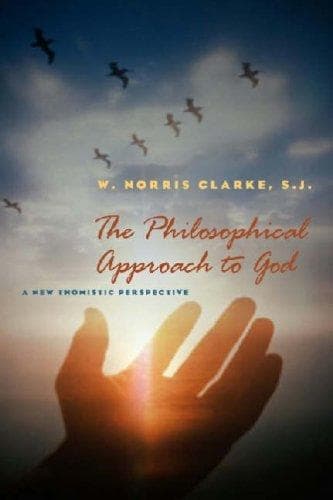
The Philosophical Approach to God: A New Thomistic Perspective
المنهج الفلسفي إلى الله: منظور توماوي جديد
L'Approche philosophique de Dieu : Une nouvelle perspective thomiste
Editorial summary
This monograph presents a systematic reconstruction of natural theology through a creative synthesis of traditional Thomistic metaphysics and contemporary philosophical insights. Clarke develops a philosophical demonstration of God's existence and nature that engages modern objections while maintaining fidelity to the realist metaphysical framework of Thomas Aquinas. The work represents a significant contribution to the revival of Thomistic philosophy in dialogue with twentieth-century thought, particularly process philosophy and personalist traditions.
Clarke's central argument proceeds through careful analysis of the metaphysical implications of finite being. He argues that the existence of any finite, changing reality necessarily points to an infinite, unchanging source of existence. This demonstration unfolds through examination of participation, causality, and the real distinction between essence and existence in created beings. Unlike purely historical expositions of Aquinas, Clarke reformulates classical arguments in contemporary terminology, addressing post-Kantian epistemological concerns while defending metaphysical realism.
The work engages critically with several philosophical traditions. Against logical positivism and its descendants, Clarke defends the meaningfulness of metaphysical discourse about transcendent reality. He responds to Humean and Kantian restrictions on causal reasoning, arguing that properly understood causality extends beyond empirical sequences to ontological dependence. The text also incorporates insights from process thought, particularly regarding divine relationality, while maintaining divine immutability and perfection against process theology's core claims.
Methodologically, Clarke employs phenomenological analysis of finite existence combined with rigorous metaphysical reasoning. He begins with careful description of experienced reality—change, multiplicity, limitation—then proceeds to uncover the necessary conditions for such phenomena. This approach bridges existential and essentialist concerns, showing how concrete existence points toward its transcendent ground.
The monograph's significance lies in its sophisticated defense of classical theism against modern and postmodern challenges. Clarke demonstrates that Thomistic natural theology remains philosophically viable when properly articulated and defended. His integration of personalist insights enriches traditional metaphysical arguments, presenting God not merely as abstract being but as personal, relational reality. The work provides important resources for contemporary debates about divine attributes, the cosmological argument, and the relationship between philosophical and revealed theology. It stands as a major statement of neo-Thomistic philosophy, showing how ancient wisdom can address perennial questions through creative appropriation rather than mere repetition.
Argument formulations engaged
Related works
Clarke, W. Norris (2007). The Philosophical Approach to God: A New Thomistic Perspective. Fordham University Press.
@book{the-philosophical-approach-to-god-a-new-,
  author    = {Clarke, W. Norris},
  title     = {The Philosophical Approach to God: A New Thomistic Perspective},
  year      = {2007},
  publisher = {Fordham University Press},
  url       = {https://god-database.com/en/works/the-philosophical-approach-to-god-a-new-thomistic-perspective-2007}
}