
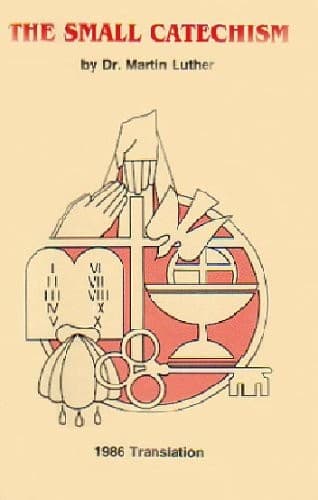
The Small Catechism
التعليم المسيحي الصغير
Le Petit Catéchisme
Editorial summary
Luther's Small Catechism represents a foundational Protestant articulation of God's nature and humanity's relationship to the divine, written for ordinary believers and their spiritual instruction. The work emerges from Luther's pastoral concern following his 1528 visitations to Saxon parishes, where he discovered widespread theological ignorance among both clergy and laity. This pedagogical text systematically presents core Christian doctrines through an exposition of six chief parts: the Ten Commandments, the Apostles' Creed, the Lord's Prayer, Baptism, Confession, and the Lord's Supper.
The catechism advances a distinctly Lutheran understanding of God as simultaneously transcendent lawgiver and immanent redeemer. Through the Decalogue exposition, Luther presents God as the sovereign creator who demands exclusive worship and ethical obedience, yet his treatment emphasizes human incapacity to fulfill divine law through natural powers. This anthropological pessimism sets up his central theological move: God must be understood primarily through Christ's salvific work rather than through natural theology or moral achievement.
Luther's treatment of the Creed articulates God as Trinity, with particular emphasis on each person's soteriological function. The Father creates and sustains, the Son redeems through his incarnation and atonement, and the Spirit sanctifies through Word and Sacrament. This framework opposes both philosophical abstractions about divine essence and works-righteousness approaches to reaching God. The catechism's method is deliberately concrete, avoiding scholastic speculation in favor of existential relevance for Christian life.
The work's significance for debates about God lies in its democratization of theological knowledge and its insistence on divine accessibility through faith alone. Against medieval Catholic emphasis on ecclesiastical mediation and merit-based soteriology, Luther presents God as directly approachable through Christ, with Scripture and sacraments as the primary means of divine encounter. The catechism's influence extends beyond confessional boundaries, shaping Protestant conceptions of religious education and lay theological competence.
Luther's pedagogical approach reflects humanist educational reforms while maintaining traditional catechetical structure. His explanations begin with the phrase "We should fear and love God," establishing divine reverence as the foundation for all Christian ethics and practice. This formulation encapsulates the Reformed understanding of God as both judge and gracious father, terrible in holiness yet merciful toward repentant sinners.
Argument formulations engaged
Related works
Luther, Martin (1529). The Small Catechism.
@book{the-small-catechism-1529,
  author    = {Luther, Martin},
  title     = {The Small Catechism},
  year      = {1529},
  url       = {https://god-database.com/en/works/the-small-catechism-1529}
}