
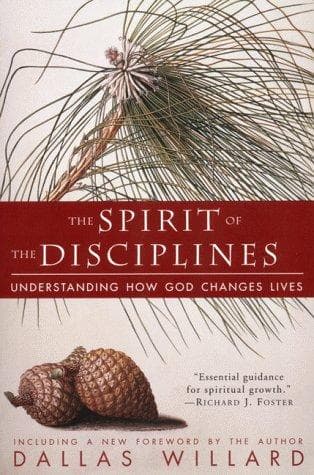
The Spirit of the Disciplines: Understanding How God Changes Lives
روح الانضباط: فهم كيف يغير الله الحياة
L'Esprit des disciplines : Comprendre comment Dieu transforme les vies
Editorial summary
Dallas Willard's The Spirit of the Disciplines examines spiritual transformation through the lens of spiritual disciplines, offering a theologically grounded approach to understanding how divine grace operates through human practices. Writing from within evangelical Christianity, Willard challenges both secular dismissals of spiritual formation and superficial religious approaches that minimize the role of intentional practice in Christian life.
The work develops a comprehensive theology of spiritual disciplines, arguing that practices such as solitude, fasting, study, and service function as means through which believers participate in divine transformation. Willard contends that these disciplines are not merely human efforts at self-improvement but channels through which God's grace reshapes human character. He grounds this argument in an incarnational theology that emphasizes the integration of body and spirit, rejecting dualistic approaches that separate physical practices from spiritual realities.
Central to Willard's thesis is the claim that Jesus himself embodied a life of spiritual discipline, and that following Christ requires adopting similar practices. He distinguishes between disciplines of abstinence (solitude, silence, fasting) and disciplines of engagement (study, worship, service), arguing that both types work together to conform believers to Christ's character. This framework challenges Protestant traditions that emphasize faith alone while neglecting the formative power of embodied practices.
The monograph engages critically with contemporary evangelicalism's tendency toward what Willard terms "vampire Christianity" - wanting Christ's benefits without transformation of life. He argues that authentic faith necessarily involves comprehensive life change facilitated by disciplined practice. This position stakes out middle ground between works-righteousness and cheap grace, maintaining that while salvation comes through faith, spiritual maturity requires intentional cultivation through divinely appointed means.
Willard's philosophical training informs his analysis, as he draws on phenomenology and philosophy of mind to articulate how practices shape consciousness and character. He argues that spiritual disciplines work not through mechanical causation but by positioning practitioners to receive divine grace more fully. This sophisticated account of divine-human cooperation in spiritual formation contributes to debates about sanctification, the relationship between grace and human effort, and the nature of Christian discipleship.
The work's significance lies in its recovery of spiritual disciplines for Protestant Christianity while maintaining theological orthodoxy about salvation by grace, offering a practical theology that bridges devotional practice and systematic theology.
Argument formulations engaged
Willard, Dallas (1988). The Spirit of the Disciplines: Understanding How God Changes Lives.
@book{the-spirit-of-the-disciplines-understand,
  author    = {Willard, Dallas},
  title     = {The Spirit of the Disciplines: Understanding How God Changes Lives},
  year      = {1988},
  url       = {https://god-database.com/en/works/the-spirit-of-the-disciplines-understanding-how-god-changes-lives-1988}
}