
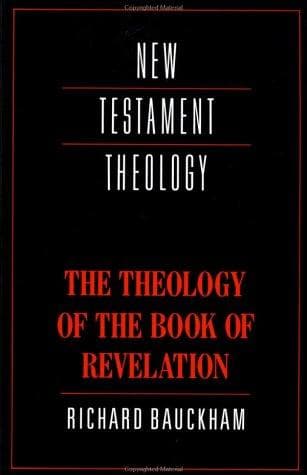
The Theology of the Book of Revelation
لاهوت سفر الرؤيا
La Théologie du Livre de l'Apocalypse
Editorial summary
Richard Bauckham's monograph examines the theological framework of Revelation, demonstrating how this apocalyptic text articulates a distinctive vision of God's sovereignty and relationship to human history. While not primarily concerned with philosophical arguments for divine existence, Bauckham's analysis reveals how Revelation constructs its understanding of God through symbolic narrative and prophetic imagery, offering insights relevant to contemporary theological discourse about divine nature and action.
The work argues that Revelation presents God as the transcendent sovereign whose purposes encompass and ultimately determine historical events, while simultaneously affirming divine engagement with human suffering and resistance to evil. Bauckham contends that the text's elaborate symbolism functions not merely as coded political commentary but as theological argumentation about God's character and intentions. He demonstrates how Revelation's portrayal of divine throne visions, liturgical scenes, and eschatological promises constitutes a coherent theological system addressing fundamental questions about theodicy, divine justice, and the relationship between transcendence and immanence.
Methodologically, Bauckham employs literary analysis alongside historical-critical approaches, examining how Revelation's imagery draws from Hebrew prophetic traditions while adapting them for its specific context. He traces the text's intertextual connections to demonstrate how its theology emerges through creative reinterpretation of scriptural motifs. This approach reveals how Revelation addresses the problem of evil not through abstract theodicy but through narrative depiction of God's ultimate triumph over destructive powers.
The monograph's significance for the God debate lies in its demonstration of how apocalyptic literature functions as theological discourse. Bauckham shows that Revelation's highly symbolic mode of expression conveys sophisticated theological claims about divine sovereignty, justice, and redemptive purposes. His analysis challenges reductive readings that dismiss apocalyptic texts as merely vengeful fantasies, arguing instead that Revelation offers profound theological reflection on how God relates to historical evil and human suffering.
Bauckham's work contributes to broader discussions about how religious texts construct and communicate conceptions of deity. By explicating Revelation's theological coherence, he provides resources for understanding how apocalyptic thinking shapes belief in divine providence and eschatological hope. The monograph thus illuminates how particular textual traditions develop distinctive approaches to perennial theological questions about God's nature and purposes in relation to created reality.
Argument formulations engaged
Bauckham, Richard (1993). The Theology of the Book of Revelation. Cambridge University Press.
@book{the-theology-of-the-book-of-revelation-1,
  author    = {Bauckham, Richard},
  title     = {The Theology of the Book of Revelation},
  year      = {1993},
  publisher = {Cambridge University Press},
  url       = {https://god-database.com/en/works/the-theology-of-the-book-of-revelation-1993}
}