
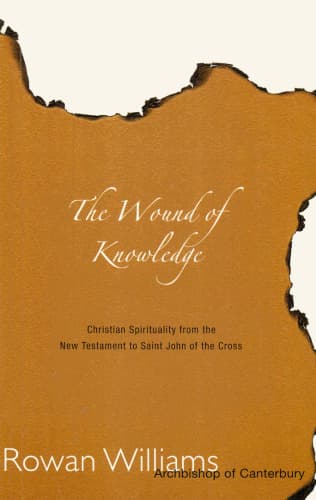
The Wound of Knowledge: Christian Spirituality from the New Testament to St. John of the Cross
جرح المعرفة: الروحانية المسيحية من العهد الجديد إلى القديس يوحنا الصليبي
La Blessure de la Connaissance : Spiritualité Chrétienne du Nouveau Testament à Saint Jean de la Croix
Editorial summary
This historical study examines the development of Christian spirituality from its origins through the sixteenth century, tracing how successive generations of believers have grappled with the paradoxical nature of divine knowledge. Williams argues that authentic Christian spirituality emerges from confronting the "wound" inflicted by the crucifixion - the radical disruption of human expectations about divine power and presence. The work demonstrates how this foundational trauma shapes all subsequent Christian reflection on knowing God.
Williams begins with New Testament writings, showing how early Christians struggled to articulate their experience of God's self-revelation in Christ as both fulfillment and overturning of religious expectations. He traces this tension through patristic writers, particularly examining how figures like Origen and Gregory of Nyssa developed apophatic approaches that emphasized divine incomprehensibility while maintaining the possibility of transformative encounter. The monograph reveals how monastic traditions, from desert fathers to Benedict, institutionalized practices for navigating the darkness of unknowing that accompanies genuine spiritual growth.
The analysis extends through medieval mystics, including Eckhart and Julian of Norwich, who articulated increasingly sophisticated accounts of divine absence as a mode of presence. Williams demonstrates how these writers developed theological vocabularies for experiences that seemed to contradict doctrinal affirmations about God's nature and accessibility. The study culminates with John of the Cross, whose systematic exploration of spiritual darkness represents both a synthesis and radicalization of earlier traditions.
Throughout, Williams employs a method that combines historical contextualization with phenomenological attention to religious experience. He shows how each era's political and intellectual challenges shaped its distinctive approaches to the God question, while identifying recurring patterns in how Christians have negotiated the tension between theological knowledge and experiential unknowing. The work contributes to contemporary debates by suggesting that Christianity's intellectual vitality depends on maintaining rather than resolving this fundamental tension.
Williams challenges both rationalist and fideist approaches to religious knowledge, arguing that Christian spirituality operates through a dialectic of affirmation and negation. His historical survey demonstrates that the most profound Christian thinkers have consistently refused easy answers about divine accessibility, instead developing practices and concepts that honor both human longing for God and divine transcendence. The monograph thus presents Christian tradition as a sustained meditation on the limits and possibilities of religious knowledge.
Argument formulations engaged
Related works
Williams, Rowan (1979). The Wound of Knowledge: Christian Spirituality from the New Testament to St. John of the Cross. Cowley Publications.
@book{the-wound-of-knowledge-christian-spiritu,
  author    = {Williams, Rowan},
  title     = {The Wound of Knowledge: Christian Spirituality from the New Testament to St. John of the Cross},
  year      = {1979},
  publisher = {Cowley Publications},
  url       = {https://god-database.com/en/works/the-wound-of-knowledge-christian-spirituality-from-the-new-testament-to-st-john-of-the-cross-1979}
}