
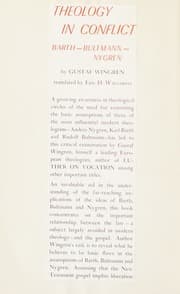
Theology in Conflict: Nygren, Barth, Bultmann
اللاهوت في صراع: نيغرين، بارت، بولتمان
Théologie en Conflit : Nygren, Barth, Bultmann
Editorial summary
Gustaf Wingren's "Theology in Conflict: Nygren, Barth, Bultmann" examines three dominant theological paradigms that shaped twentieth-century Protestant thought, analyzing their divergent approaches to fundamental questions about God, revelation, and human existence. Written in 1958, this comparative study emerged during a period of intense theological debate in the aftermath of World War 2, when European theology sought new foundations beyond liberal Protestant assumptions.
The work centers on Anders Nygren's agape theology, Karl Barth's dialectical theology, and Rudolf Bultmann's existentialist interpretation of Christianity. Wingren demonstrates how each theologian's conception of God fundamentally determines their entire theological system. For Nygren, God reveals himself through the pure, unmotivated love of agape, which stands in absolute contrast to human eros. This divine love, manifest supremely in Christ's cross, establishes the proper relationship between God and humanity. Barth, conversely, emphasizes God's radical transcendence and the infinite qualitative distinction between Creator and creature. His theology of the Word insists that God can only be known through God's self-revelation in Jesus Christ, rejecting natural theology and human religious experience as valid sources of divine knowledge. Bultmann's program of demythologization seeks to translate the mythological worldview of the New Testament into existentialist categories, arguing that authentic faith requires decision in response to God's address through the kerygma.
Wingren's critical analysis reveals how these theological positions generate conflicting understandings of scripture, church, ethics, and human nature. He argues that Nygren's sharp distinction between agape and eros creates an unbridgeable gulf between divine and human love. Barth's christocentric focus, while preserving divine sovereignty, potentially diminishes creation's goodness and human responsibility. Bultmann's existentialism, though addressing modern consciousness, risks reducing theology to anthropology.
The significance of Wingren's study lies in its systematic comparison of these influential approaches to the God question in modern theology. By examining how methodological starting points determine theological outcomes, he illuminates the profound disagreements within Protestant theology about God's nature, revelation, and relationship to humanity. His work demonstrates that seemingly technical theological disputes ultimately concern fundamental questions about who God is and how God relates to the world. This analysis remains valuable for understanding how different theological methods generate distinct conceptions of divine reality.
Argument formulations engaged
Wingren, Gustaf (1958). Theology in Conflict: Nygren, Barth, Bultmann.
@book{theology-in-conflict-nygren-barth-bultma,
  author    = {Wingren, Gustaf},
  title     = {Theology in Conflict: Nygren, Barth, Bultmann},
  year      = {1958},
  url       = {https://god-database.com/en/works/theology-in-conflict-nygren-barth-bultmann-1958}
}