
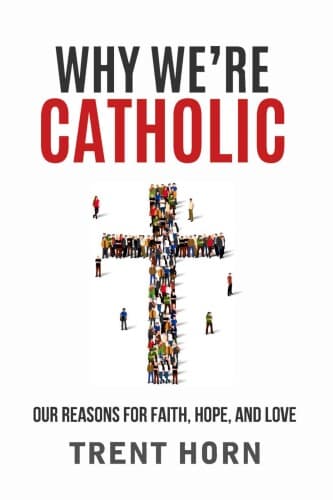
Why We're Catholic: Our Reasons for Faith, Hope, and Love
لماذا نحن كاثوليك: أسبابنا للإيمان والرجاء والمحبة
Pourquoi nous sommes catholiques : Nos raisons de foi, d'espoir et d'amour
Editorial summary
This accessible apologetic work presents a systematic defense of Catholic Christianity aimed at skeptics, lapsed Catholics, and those exploring religious options. Horn structures his argument around common objections to religious belief generally and Catholicism specifically, offering philosophical and evidential responses to questions ranging from God's existence to the Church's moral teachings.
The work begins with fundamental metaphysical questions, addressing why belief in God remains reasonable in a scientific age. Horn engages standard atheistic objections regarding divine hiddenness and the problem of evil, drawing on classical theistic philosophy while incorporating contemporary scientific findings. He argues that modern physics and cosmology, rather than eliminating the need for God, actually strengthen traditional arguments from contingency and design. Against naturalistic explanations of reality, he contends that theism better accounts for consciousness, moral obligations, and the intelligibility of the universe.
Moving from generic theism to specifically Christian claims, Horn examines the historical evidence for Jesus's resurrection, engaging skeptical scholars like Bart Ehrman while defending the reliability of Gospel accounts. He addresses the plurality of religions by arguing for Christianity's unique evidential basis and coherent worldview. The work then transitions to distinctively Catholic doctrines, defending papal authority, Marian teachings, and the sacramental system against Protestant objections.
Horn's methodology combines popular-level philosophy with appeals to personal experience and practical consequences. He frequently employs analogies from everyday life to illustrate abstract theological concepts, making complex arguments accessible to general readers. While engaging academic sources, the work prioritizes clarity over scholarly comprehensiveness, functioning more as an introduction to Catholic apologetics than a technical treatise.
The text reflects the contemporary Catholic intellectual revival, particularly the influence of philosophers like Edward Feser and Robert Spitzer who synthesize Thomistic philosophy with modern science. Horn positions Catholicism as intellectually robust while emotionally satisfying, arguing that Catholic teaching on controversial issues like sexuality and bioethics, though countercultural, promotes human flourishing.
This work contributes to the God debate by demonstrating how traditional Catholic apologetics adapts to twenty-first century challenges. Rather than retreating from rational discourse, Horn embraces philosophical argument while maintaining that faith ultimately transcends purely intellectual assent. His integration of classical theistic proofs with responses to contemporary moral objections illustrates how Catholic thinkers continue defending their tradition's reasonableness in pluralistic contexts.
Argument formulations engaged
Horn, Trent (2017). Why We're Catholic: Our Reasons for Faith, Hope, and Love. Catholic Answers Press.
@book{why-were-catholic-our-reasons-for-faith-,
  author    = {Horn, Trent},
  title     = {Why We're Catholic: Our Reasons for Faith, Hope, and Love},
  year      = {2017},
  publisher = {Catholic Answers Press},
  url       = {https://god-database.com/en/works/why-were-catholic-our-reasons-for-faith-hope-and-love-2017}
}