
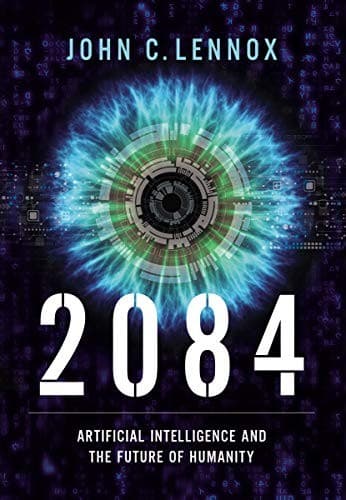
2084: Artificial Intelligence and the Future of Humanity
2084: الذكاء الاصطناعي ومستقبل الإنسانية
2084 : L'Intelligence Artificielle et l'Avenir de l'Humanité
Editorial summary
This volume examines the intersection of artificial intelligence, human nature, and theological questions about consciousness and personhood. Lennox, a mathematician and Christian apologist, engages with contemporary debates about AI's potential to match or exceed human intelligence, while defending the irreducibility of human beings as creatures made in God's image.
The work develops three central arguments against materialist assumptions underlying much AI discourse. First, Lennox contends that consciousness cannot emerge from purely computational processes, drawing on mathematical insights about the limits of algorithms and the non-algorithmic nature of human understanding. He engages critically with positions from Daniel Dennett, Sam Harris, and Yuval Noah Harari, arguing their reductionist accounts of mind fail to explain qualia, intentionality, and moral agency. Second, the author challenges transhumanist visions of technological transcendence, particularly those promoted by Ray Kurzweil and Nick Bostrom, suggesting these represent a form of secular eschatology that misunderstands both human nature and divine purpose. Third, Lennox argues that ethical concerns about AI development and deployment require transcendent moral grounding that naturalistic worldviews cannot provide.
The monograph employs an interdisciplinary methodology, weaving together computer science, philosophy of mind, biblical theology, and ethics. Lennox draws on Roger Penrose's arguments about non-computability in human cognition while supplementing them with theological insights about the imago Dei. His treatment of consciousness connects contemporary neuroscience with classical Christian anthropology, particularly engaging with emergence theories and their limitations.
The work's significance lies in its systematic theological response to AI optimism and the implicit materialism of much technological discourse. While many Christian thinkers have addressed AI ethics peripherally, Lennox provides sustained engagement with the philosophical presuppositions driving AI research and transhumanist aspirations. He positions artificial intelligence as revealing rather than resolving fundamental questions about human nature, consciousness, and purpose.
The volume contributes to growing literature on theology and technology by demonstrating how classical theistic commitments about human nature remain relevant to cutting-edge technological developments. Lennox's mathematical background enables sophisticated engagement with computational theories of mind, while his apologetic concerns ensure accessibility to broader audiences wrestling with AI's implications for human self-understanding and divine purpose in creation.
Argument formulations engaged
Related works
Lennox, John (2020). 2084: Artificial Intelligence and the Future of Humanity. Zondervan.
@book{2084-artificial-intelligence-and-the-fut,
  author    = {Lennox, John},
  title     = {2084: Artificial Intelligence and the Future of Humanity},
  year      = {2020},
  publisher = {Zondervan},
  url       = {https://god-database.com/en/works/2084-artificial-intelligence-and-the-future-of-humanity-2020}
}