
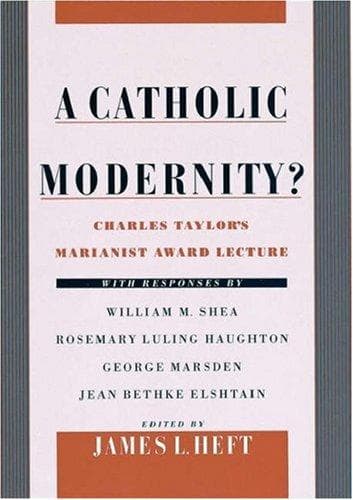
A Catholic Modernity?
حداثة كاثوليكية؟
Une Modernité Catholique ?
Editorial summary
This work examines whether modernity and Catholic Christianity can achieve genuine reconciliation, challenging both secular triumphalism and religious nostalgia. Taylor argues that the relationship between Catholicism and modernity need not be one of mutual exclusion, proposing instead a nuanced engagement that transforms both traditions. The central thesis contends that authentic Catholic witness requires neither wholesale rejection of modern values nor uncritical accommodation, but rather a discriminating dialogue that recognizes both the genuine achievements and profound limitations of secular modernity.
Taylor develops his argument through historical and philosophical analysis, tracing the complex genealogy of modern values such as human rights, equality, and universal benevolence. He demonstrates that these supposedly secular achievements have deep Christian roots, while simultaneously acknowledging how their development often occurred through struggle against ecclesiastical authorities. This genealogical method reveals the paradoxical nature of secularization: modern humanism both depends upon and rebels against its Christian origins.
The work critiques two prevalent approaches to the modernity question. Against traditionalist rejection, Taylor argues that withdrawing from modernity abandons legitimate human aspirations that Christianity itself helped nurture. Against progressive accommodation, he warns that uncritical embrace of modern values risks losing Christianity's prophetic edge and transcendent dimension. His alternative vision proposes that Catholics should engage modernity as both grateful heirs and critical witnesses, affirming its authentic goods while challenging its reductive anthropology and closed immanence.
Central to Taylor's project is the concept of "exclusive humanism" - the modern attempt to construct human flourishing without reference to transcendence. He argues this project ultimately impoverishes human existence, cutting off access to sources of meaning beyond the immanent frame. A Catholic modernity would therefore involve witnessing to transcendent possibilities while remaining fully engaged with contemporary concerns for justice, dignity, and authentic selfhood.
The work's significance lies in offering a sophisticated third way beyond sterile oppositions between tradition and progress, faith and reason, transcendence and immanence. Taylor provides intellectual resources for believers seeking to navigate modern pluralism without sacrificing either Catholic identity or cultural relevance. His approach influences subsequent discussions about post-secular possibilities and the role of religious traditions in public discourse. The analysis demonstrates how theological reflection can illuminate broader cultural predicaments, making this work valuable for understanding contemporary debates about secularization, religious revival, and the future of Western civilization.
Argument formulations engaged
Taylor, Charles (1999). A Catholic Modernity?. Oxford University Press.
@book{a-catholic-modernity-1999,
  author    = {Taylor, Charles},
  title     = {A Catholic Modernity?},
  year      = {1999},
  publisher = {Oxford University Press},
  url       = {https://god-database.com/en/works/a-catholic-modernity-1999}
}