
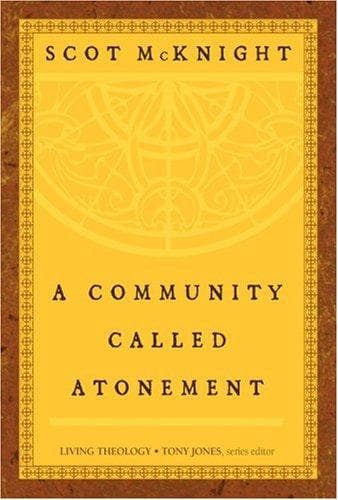
A Community Called Atonement
جماعة تُدعى الكفارة
Une communauté appelée réconciliation
Editorial summary
Scot McKnight's A Community Called Atonement presents a comprehensive theological vision that situates atonement theory within ecclesiology, challenging individualistic interpretations of salvation prevalent in contemporary evangelicalism. The work argues that atonement cannot be properly understood apart from God's intention to create a reconciled community, positioning the church as both the context and goal of Christ's atoning work.
McKnight develops his argument through what he terms a "golf bag" approach to atonement theology, suggesting that different biblical metaphors for atonement serve distinct purposes rather than competing for supremacy. This methodological framework allows him to incorporate multiple atonement theories—including Christus Victor, satisfaction, moral influence, and penal substitution—while subordinating each to the overarching purpose of forming God's people. The author critiques reductionist approaches that privilege one model, particularly targeting forms of evangelical theology that isolate penal substitution from its communal implications.
The work engages significantly with New Perspective scholarship on Paul, drawing particularly on the work of N.T. Wright and James Dunn to argue that justification and atonement find their proper context in God's covenant purposes for Israel and the nations. McKnight contends that viewing atonement through this covenant-historical lens reveals its essentially corporate dimension, where individual salvation serves the larger purpose of creating a kingdom community marked by justice, love, and reconciliation.
Central to McKnight's theological construction is his understanding of the imago Dei and the concept of "periochoretic community"—humanity created to reflect the relational nature of the Trinity. Sin fractures these relationships at multiple levels, necessitating an atonement that addresses not merely individual guilt but systemic brokenness in human communities. The cross thus becomes God's means of creating a new social reality where ethnic, economic, and gender divisions are overcome through participation in Christ.
The monograph's significance lies in its challenge to both academic and popular theologies that divorce soteriology from ecclesiology. By insisting that atonement theories must account for their communal outcomes, McKnight provides a framework for evaluating competing interpretations based on their capacity to generate communities embodying kingdom values. This approach offers fresh perspective on classical debates while addressing contemporary concerns about the social implications of atonement theology, making the work relevant for systematic theologians, biblical scholars, and practitioners seeking integrated theological vision.
Argument formulations engaged
McKnight, Scot (2007). A Community Called Atonement.
@book{a-community-called-atonement-2007,
  author    = {McKnight, Scot},
  title     = {A Community Called Atonement},
  year      = {2007},
  url       = {https://god-database.com/en/works/a-community-called-atonement-2007}
}