
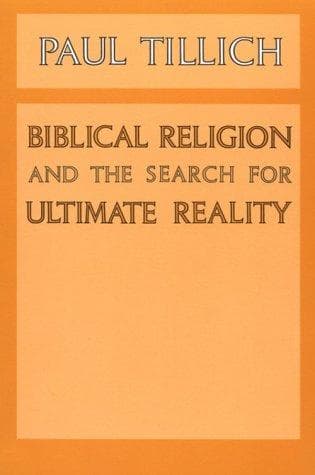
Biblical Religion and the Search for Ultimate Reality
الدين التوراتي والبحث عن الحقيقة المطلقة
Religion biblique et recherche de la réalité ultime
Editorial summary
Paul Tillich's Biblical Religion and the Search for Ultimate Reality examines the relationship between the biblical understanding of God and philosophical conceptions of ultimate reality. Writing in 1955, Tillich addresses a fundamental tension in modern theology: the apparent conflict between the personal God of biblical revelation and the impersonal absolute of philosophical speculation. This work represents a significant contribution to 20th century Protestant theology by attempting to reconcile existential and ontological approaches to the divine.
Tillich argues that biblical religion and philosophical inquiry, rather than being opposed, represent complementary approaches to the same ultimate concern. He contends that the biblical God, encountered as personal and relational, and the philosopher's ultimate reality, conceived as being-itself or the ground of being, point to the same fundamental reality approached from different existential situations. The biblical approach emerges from the experience of encounter and covenant, while the philosophical approach arises from the human quest for universal meaning and rational comprehension.
The work challenges both biblical literalists who reject philosophical reflection and rationalist philosophers who dismiss religious experience as primitive anthropomorphism. Tillich employs his method of correlation, demonstrating how existential questions arising from human finitude find their answers in religious symbols that point beyond themselves to ultimate reality. He argues that the personal language of biblical faith serves as a necessary symbolic expression of humanity's ultimate concern, while philosophical concepts provide the structural analysis needed for systematic understanding.
Tillich's analysis draws on his broader theological system, particularly his understanding of God as "being-itself" rather than a being among beings. He shows how biblical narratives and prophetic proclamations express in concrete, historical terms what philosophy articulates in abstract, universal categories. The work engages with both neo-orthodox theologians who emphasize divine transcendence and liberal theologians who seek rational foundations for faith.
This monograph matters because it offers a sophisticated theological response to the modern crisis of religious language. By refusing to choose between Athens and Jerusalem, Tillich provides a framework for understanding how biblical faith can maintain its integrity while engaging seriously with philosophical questions about ultimate reality. His approach influenced subsequent discussions about religious language, the relationship between theology and philosophy, and the possibility of natural theology in Protestant thought.
Argument formulations engaged
Tillich, Paul (1955). Biblical Religion and the Search for Ultimate Reality. University of Chicago Press.
@book{biblical-religion-and-the-search-for-ult,
  author    = {Tillich, Paul},
  title     = {Biblical Religion and the Search for Ultimate Reality},
  year      = {1955},
  publisher = {University of Chicago Press},
  url       = {https://god-database.com/en/works/biblical-religion-and-the-search-for-ultimate-reality-1955}
}