
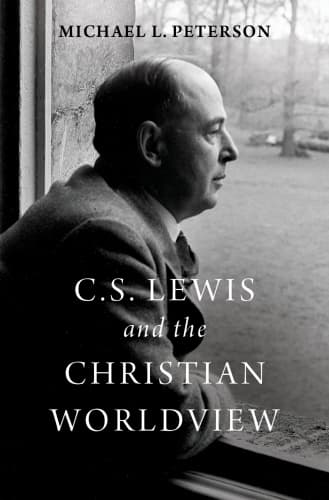
C. S. Lewis and the Christian Worldview
ك. س. لويس ونظرة العالم المسيحية
C. S. Lewis et la vision du monde chrétienne
Editorial summary
This monograph examines C. S. Lewis's intellectual framework and its implications for contemporary Christian apologetics and philosophy. Peterson analyzes Lewis's distinctive approach to defending Christian theism, demonstrating how his literary imagination, philosophical acumen, and theological insights converge to create a comprehensive worldview that addresses perennial questions about God, meaning, and human existence.
The work situates Lewis within the broader tradition of Christian philosophical thought while highlighting his unique contributions to natural theology and the problem of religious knowledge. Peterson argues that Lewis develops a cumulative case for theism that integrates multiple lines of evidence: the argument from reason, moral argument, argument from desire, and aesthetic considerations. Unlike many twentieth-century apologists who relied primarily on propositional arguments, Lewis employs narrative, metaphor, and imaginative appeal to make the Christian worldview intellectually and existentially compelling.
Peterson examines Lewis's critique of naturalism, showing how Lewis argues that materialist worldviews undermine the very possibility of rational thought and moral judgment. The author analyzes Lewis's contention that naturalism is self-refuting because it cannot account for the reliability of human cognitive faculties. This argument anticipates later developments in philosophy of mind and epistemology, particularly Alvin Plantinga's evolutionary argument against naturalism.
The monograph explores Lewis's treatment of the problem of evil, analyzing his free will theodicy and his existential approach to suffering. Peterson demonstrates how Lewis moves beyond purely theoretical solutions to address the lived experience of pain and loss, particularly in works like A Grief Observed. This integration of philosophical argument with pastoral concern exemplifies Lewis's holistic approach to the God question.
Peterson's analysis reveals how Lewis navigates between fundamentalism and liberal theology, offering a "mere Christianity" that maintains orthodox commitments while engaging seriously with modern intellectual challenges. The work shows how Lewis's apologetic strategy addresses both the cultured despisers of religion and ordinary believers seeking rational grounds for faith.
This monograph contributes to contemporary philosophy of religion by recovering Lewis's sophisticated philosophical theology for current debates about theistic belief, religious epistemology, and the rationality of faith. Peterson demonstrates that Lewis's integration of reason, imagination, and experience offers resources for defending theism against reductive naturalism while avoiding fideism. The work establishes Lewis as a significant philosophical theologian whose arguments remain relevant to contemporary discussions about God's existence and nature.
Argument formulations engaged
Related works
Peterson, Michael L. (2020). C. S. Lewis and the Christian Worldview. Oxford University Press.
@book{c-s-lewis-and-the-christian-worldview-20,
  author    = {Peterson, Michael L.},
  title     = {C. S. Lewis and the Christian Worldview},
  year      = {2020},
  publisher = {Oxford University Press},
  url       = {https://god-database.com/en/works/c-s-lewis-and-the-christian-worldview-2020}
}