
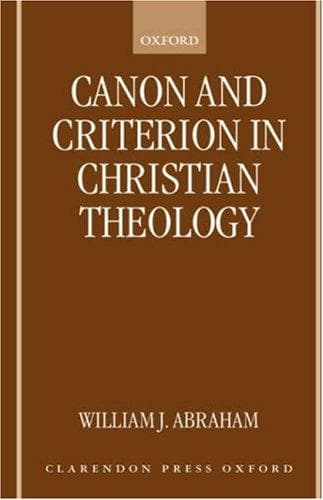
Canon and Criterion in Christian Theology: From the Fathers to Feminism
القانون والمعيار في اللاهوت المسيحي: من الآباء إلى النسوية
Canon et critère en théologie chrétienne : Des Pères au féminisme
Editorial summary
William J. Abraham's Canon and Criterion in Christian Theology examines the fundamental epistemological problem facing Christian theology: how to establish reliable criteria for theological knowledge and judgment. The work traces the historical development of various approaches to theological authority from the patristic period through contemporary feminist theology, offering both critical analysis and constructive proposals for theological method.
Abraham argues that Christian theology has historically relied on multiple, often competing, epistemological strategies. He identifies a recurring pattern wherein theologians attempt to establish a single, decisive criterion for theological truth—whether scripture, tradition, reason, or experience—only to discover that such reductionism fails to account for the complexity of theological knowledge. The patristic fathers, he demonstrates, employed a more flexible approach that drew on multiple sources of authority without reducing theology to any single criterion. This pluralistic epistemology, Abraham contends, was gradually displaced by various forms of foundationalism that sought greater methodological certainty.
The work provides detailed analysis of how different theological movements have addressed the criterion problem. Abraham examines the sola scriptura principle of the Reformation, showing how it ultimately required supplementary interpretive frameworks. He analyzes the role of tradition in Roman Catholic theology, particularly after Vatican I and II, arguing that appeals to tradition cannot escape questions about which traditions count as authoritative. The modern turn to experience, whether in liberal Protestantism or feminist theology, receives careful scrutiny as Abraham explores how experiential criteria face their own legitimation problems.
Abraham's constructive proposal advocates for what he terms "canonical theism"—an approach that recognizes the irreducibly pluralistic nature of theological authority. Rather than seeking a single master criterion, he argues for embracing the canonical heritage of the church, which includes scripture, creeds, liturgy, and ecclesial practices as mutually reinforcing sources of theological insight. This approach, he maintains, better reflects the actual practice of theological reasoning throughout Christian history while avoiding the pitfalls of epistemological reductionism.
The work makes a significant contribution to theological method by challenging the assumption that theology requires a foundationalist epistemology. Abraham's historical analysis demonstrates that the search for a single criterion of theological truth represents a departure from earlier Christian practice, while his constructive proposals offer a sophisticated alternative to both conservative and liberal approaches to theological authority.
Argument formulations engaged
Abraham, William J. (1998). Canon and Criterion in Christian Theology: From the Fathers to Feminism. Oxford University Press.
@book{canon-and-criterion-in-christian-theolog,
  author    = {Abraham, William J.},
  title     = {Canon and Criterion in Christian Theology: From the Fathers to Feminism},
  year      = {1998},
  publisher = {Oxford University Press},
  url       = {https://god-database.com/en/works/canon-and-criterion-in-christian-theology-from-the-fathers-to-feminism-1998}
}