
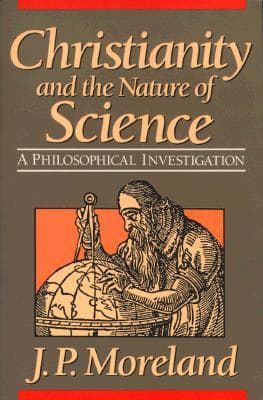
Christianity and the Nature of Science
المسيحية وطبيعة العلم
Le christianisme et la nature de la science
Editorial summary
Moreland's Christianity and the Nature of Science represents a significant contribution to the philosophy of science from an explicitly Christian perspective, challenging prevailing assumptions about the relationship between scientific methodology and religious belief. The monograph systematically examines whether Christianity and science exist in fundamental conflict, ultimately arguing that Christian theism provides a more coherent philosophical foundation for scientific practice than naturalistic alternatives.
The work proceeds through careful analysis of competing models of science-religion interaction, critiquing both the warfare thesis popularized by nineteenth-century historians and the independence model advocated by Stephen Jay Gould and others. Moreland develops a sophisticated argument that scientific realism, when properly understood, aligns more naturally with theistic presuppositions than with metaphysical naturalism. He contends that the intelligibility of nature, the reliability of human cognitive faculties, and the existence of natural laws all find better explanation within a theistic framework.
Central to Moreland's methodology is his distinction between science as an empirical discipline and scientism as a philosophical stance. He argues that while science itself remains metaphysically neutral, the practice of science requires philosophical commitments that naturalism struggles to justify. Drawing on historical examples from Newton, Kepler, and other pioneering scientists, Moreland demonstrates how Christian convictions about divine rationality and cosmic order motivated early modern scientific inquiry.
The monograph engages critically with contemporary philosophers of science, particularly those advocating methodological naturalism as essential to scientific practice. Moreland challenges this position by examining case studies where theistic assumptions have proven scientifically fruitful, while also addressing standard objections about divine action and scientific explanation. His treatment of miracles and natural law proves especially nuanced, avoiding both fideistic rejection of scientific method and uncritical acceptance of naturalistic limitations.
Moreland's work matters to the God debate by providing intellectually rigorous responses to claims that scientific progress necessitates abandoning religious belief. Rather than defending a god-of-the-gaps approach, he articulates a positive vision for how Christian theism can inform scientific theorizing without compromising empirical rigor. The monograph's influence extends beyond evangelical circles, contributing to broader discussions about the philosophical foundations of science and challenging assumptions common in both popular science writing and academic philosophy of science. His arguments continue to shape debates about methodological naturalism, scientific realism, and the proper boundaries between science and metaphysics.
Argument formulations engaged
Moreland, J. P. (1989). Christianity and the Nature of Science. Baker Book House.
@book{christianity-and-the-nature-of-science-1,
  author    = {Moreland, J. P.},
  title     = {Christianity and the Nature of Science},
  year      = {1989},
  publisher = {Baker Book House},
  url       = {https://god-database.com/en/works/christianity-and-the-nature-of-science-1989}
}