
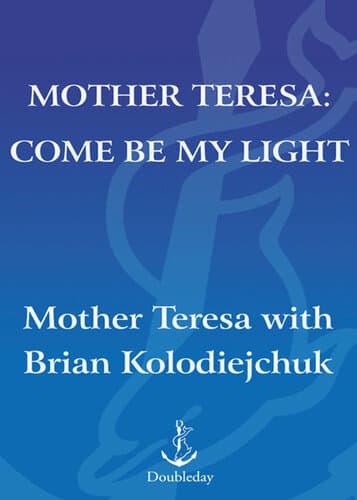
Come Be My Light
تعال كن نوري
Viens, sois ma lumière
Editorial summary
This posthumously published collection of Mother Teresa's private correspondence reveals a profound spiritual crisis spanning nearly five decades of her religious life. The letters, written primarily to her spiritual directors between 1948 and her death in 1997, document what she describes as an overwhelming sense of divine absence, spiritual darkness, and the painful feeling of being rejected by God. This intimate material starkly contrasts with her public persona as a figure of unwavering faith and provides unexpected insight into mystical theology and the phenomenology of religious experience.
The work contributes significantly to discussions of divine hiddenness and the dark night of the soul, a concept developed by John of the Cross in the sixteenth century. Mother Teresa's prolonged experience of spiritual desolation, beginning shortly after she founded the Missionaries of Charity, raises complex questions about the relationship between faith and feeling, belief and experience. Her continued devotion despite experiencing what she calls "terrible darkness" and the absence of consolation challenges both devotional and skeptical assumptions about religious commitment.
The letters reveal sophisticated theological reflection as Mother Teresa grapples with interpreting her experience. She oscillates between understanding her darkness as participation in Christ's abandonment on the cross, divine testing, punishment for unworthiness, or potentially evidence of God's non-existence. Her spiritual directors, particularly Father Joseph Neuner, frame her experience within the tradition of mystical purification, suggesting that such darkness represents a deeper form of union with God beyond sensible consolation.
For the philosophical debate about God, this text provides rare phenomenological data about sustained religious commitment in the absence of experiential confirmation. It complicates evidentialist critiques of faith by presenting a case where belief persists despite, rather than because of, religious experience. The work also illuminates the role of interpretive frameworks in shaping religious experience, as Mother Teresa's understanding of her darkness shifts depending on the theological lens applied.
The publication raises methodological questions about using private spiritual writings as evidence in debates about God's existence. While skeptics might interpret her experience as psychological projection onto divine absence, believers might see it as confirming the apophatic tradition's emphasis on divine transcendence. The text ultimately demonstrates how lived religious experience resists simple categorization within philosophical arguments about God.
Argument formulations engaged
Related works
Teresa, Mother (2007). Come Be My Light. Doubleday Religious Pub Group.
@book{come-be-my-light-2007,
  author    = {Teresa, Mother},
  title     = {Come Be My Light},
  year      = {2007},
  publisher = {Doubleday Religious Pub Group},
  url       = {https://god-database.com/en/works/come-be-my-light-2007}
}