
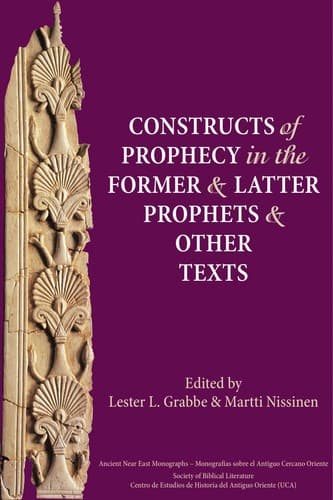
Constructs of Prophecy in the Former and Later Prophets and Other Texts
مفاهيم النبوة في الأنبياء الأولين والأخيرين وسائر النصوص
Les constructions de la prophétie dans les premiers et derniers prophètes et autres textes
Prophetic constructs in the Hebrew Bible are not uniform but reflect diverse literary, social, and theological formations across the Former and Later Prophets and related texts.
Editorial summary
This edited volume examines the evolving constructs of prophecy across biblical and related ancient Near Eastern texts, offering a comprehensive reassessment of how prophetic phenomena were understood, represented, and legitimated in antiquity. Through careful textual analysis, the contributors investigate the diverse ways prophecy functions as both a literary construct and a claimed divine communication medium, with significant implications for understanding ancient conceptions of divine-human interaction.
The volume challenges traditional scholarly approaches that have often treated prophecy as a uniform phenomenon or assumed direct correspondence between literary depictions and historical practice. Instead, contributors demonstrate how prophetic constructs vary significantly across different textual corpora, from the Former Prophets' narrative presentations to the Later Prophets' oracular collections, and including comparative material from Mari, Neo-Assyrian, and other ancient Near Eastern contexts. This comparative approach reveals prophecy not as a stable category but as a fluid construct shaped by specific literary, political, and theological agendas.
Central to the volume's contribution is its analysis of how different texts construct prophetic authority and authenticate divine communication. Contributors examine the literary strategies employed to establish prophetic legitimacy, including appeals to ecstatic experience, miraculous signs, fulfillment of predictions, and institutional recognition. The volume particularly illuminates how later texts retroactively construct earlier prophetic figures, creating idealized models that serve contemporary religious and political purposes.
The methodological approach emphasizes close reading of textual details while maintaining awareness of broader literary and historical contexts. Contributors analyze specific vocabulary, narrative patterns, and rhetorical strategies that shape prophetic portrayal. This attention to literary construction does not dismiss the possibility of actual prophetic phenomena but rather focuses on how texts mediate and interpret such claimed experiences.
For the God debate, this volume provides crucial insights into how ancient communities conceptualized divine communication and revelation. By demonstrating the constructed nature of prophetic literature, it complicates simple appeals to prophecy as straightforward evidence for divine action. The comparative approach shows how similar prophetic constructs appear across different religious traditions, raising questions about the uniqueness of biblical prophecy. Yet the volume also reveals the sophisticated theological reflection embedded in these constructs, showing how ancient writers grappled with fundamental questions about divine accessibility, human mediation, and the authentication of religious claims. This work thus contributes essential historical and literary perspective to contemporary discussions about revelation, religious experience, and the interpretation of claimed divine communication.
Structured analysis
Argument formulations engaged
Grabbe, Lester (2011). Constructs of Prophecy in the Former and Later Prophets and Other Texts. Society of Biblical Literature.
@book{constructs-of-prophecy-in-the-former-and,
  author    = {Grabbe, Lester},
  title     = {Constructs of Prophecy in the Former and Later Prophets and Other Texts},
  year      = {2011},
  publisher = {Society of Biblical Literature},
  url       = {https://god-database.com/en/works/constructs-of-prophecy-in-the-former-and-later-prophets-and-other-texts}
}