
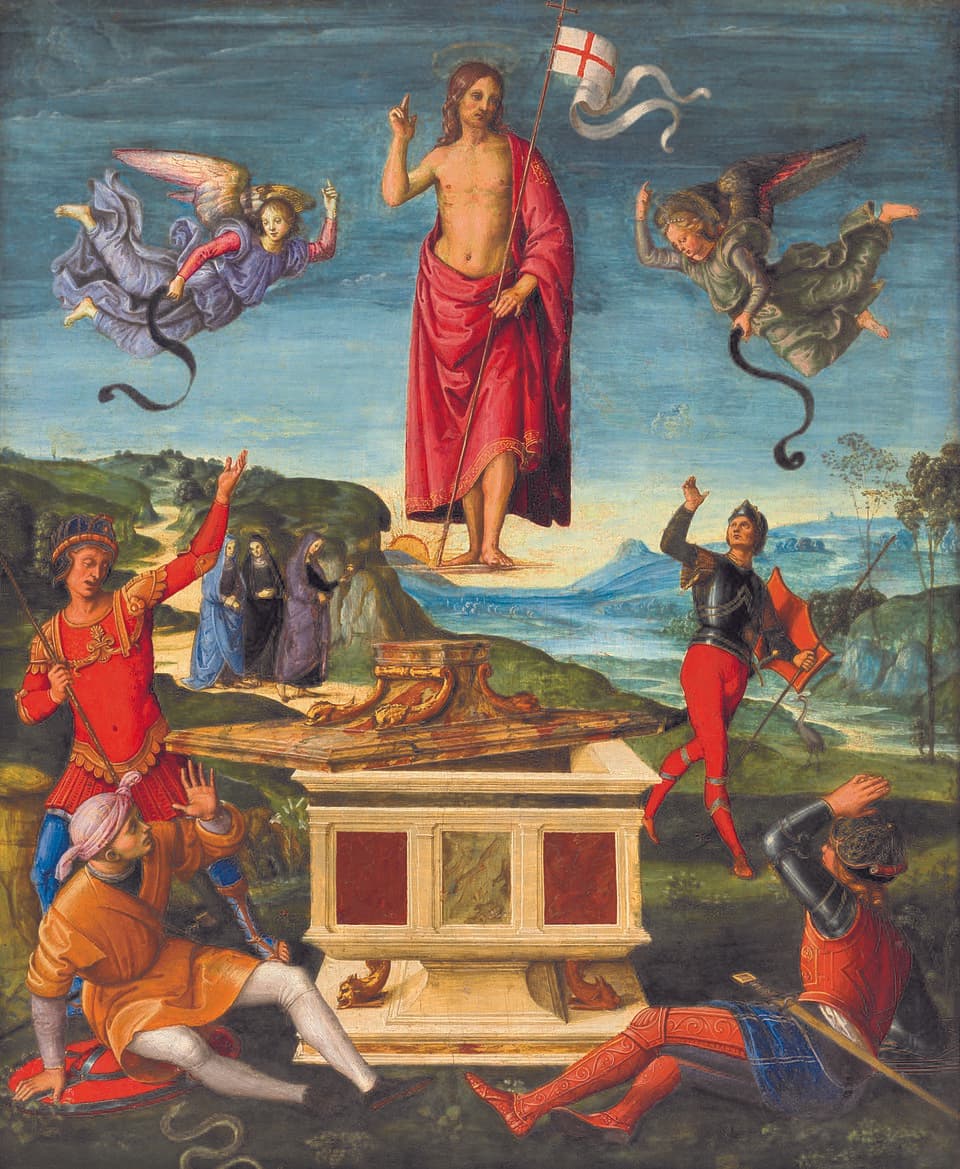
Did Jesus Rise from the Dead? The Resurrection Debate
هل قام يسوع من الموت؟ جدل القيامة
Jésus est-il ressuscité d'entre les morts ? Le débat sur la résurrection
Editorial summary
This volume presents a structured philosophical debate on the resurrection of Jesus Christ, featuring exchanges between prominent scholars representing different positions on this foundational Christian claim. The work centers on a formal debate between philosopher Antony Flew, defending a naturalistic skeptical position, and theologian Gary Habermas, arguing for the historical reality of the resurrection. Additional contributions from other scholars provide critical responses and extended analysis of the central arguments.
Flew approaches the resurrection claim through his characteristic empiricist framework, applying Humean skepticism about miracles to the Gospel accounts. He argues that extraordinary claims require extraordinary evidence, and that the available historical testimony falls short of what would be necessary to establish such a miraculous event. His position emphasizes methodological naturalism and the principle that historical inquiry must operate within the bounds of natural causation. Flew particularly challenges the reliability of eyewitness testimony recorded decades after the alleged events and questions whether alternative naturalistic explanations better account for the rise of resurrection belief.
Habermas counters with what he terms the "minimal facts approach," focusing on historical data accepted by the majority of New Testament scholars regardless of their theological commitments. He argues that certain facts about Jesus's death, the empty tomb, and the disciples' transformation are best explained by the resurrection hypothesis. His methodology attempts to bridge the gap between historical-critical scholarship and traditional apologetics by building his case on widely acknowledged historical evidence rather than assuming biblical inerrancy.
The debate format allows readers to observe how philosophical presuppositions shape the evaluation of historical evidence. While Flew maintains that no amount of testimony could establish a miracle given the uniformity of natural law, Habermas contends that ruling out supernatural explanations a priori represents an unjustified philosophical bias rather than sound historical method.
This exchange illuminates broader questions about the relationship between faith and reason, the limits of historical knowledge, and the role of worldview commitments in evaluating religious claims. The work demonstrates how the resurrection debate serves as a focal point for fundamental disagreements about epistemology, metaphysics, and the nature of historical inquiry. It remains influential in contemporary philosophy of religion as a model for rigorous engagement between naturalistic and supernaturalistic perspectives on Christianity's central historical claim.
Argument formulations engaged
Related works
Flew, Antony (1987). Did Jesus Rise from the Dead? The Resurrection Debate. Harper & Row.
@book{did-jesus-rise-from-the-dead-the-resurre,
  author    = {Flew, Antony},
  title     = {Did Jesus Rise from the Dead? The Resurrection Debate},
  year      = {1987},
  publisher = {Harper & Row},
  url       = {https://god-database.com/en/works/did-jesus-rise-from-the-dead-the-resurrection-debate-1987}
}