
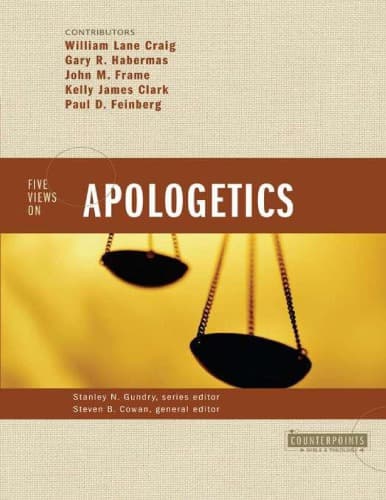
Five Views on Apologetics
خمس وجهات نظر حول الدفاعيات
Cinq points de vue sur l'apologétique
Editorial summary
This volume presents a comparative analysis of five major approaches to Christian apologetics through a structured dialogue among leading proponents of each method. The work examines how different apologetic strategies address the fundamental question of God's existence and the truth claims of Christianity, offering readers insight into the methodological diversity within theistic argumentation.
The five approaches featured are classical apologetics, evidential apologetics, cumulative case apologetics, presuppositional apologetics, and Reformed epistemology. Each contributor presents their distinctive methodology for defending theistic belief and responding to atheistic or skeptical challenges. Classical apologetics, following the Thomistic tradition, emphasizes rational proofs for God's existence before addressing specifically Christian claims. Evidential apologetics focuses on historical and empirical evidence, particularly regarding the resurrection of Jesus, as the primary basis for establishing divine reality. Cumulative case apologetics argues that multiple converging lines of evidence create a compelling case for theism, even if no single argument proves decisive. Presuppositional apologetics contends that God's existence must be the starting point for all reasoning, challenging the supposed neutrality of atheistic thought. Reformed epistemology maintains that belief in God can be properly basic and warranted without requiring evidential support.
The volume's significance lies in its dialogical format, where each contributor responds to the others' positions, revealing both the strengths and perceived weaknesses of each approach. This interchange illuminates fundamental disagreements about epistemology, the role of reason in faith, and the nature of persuasive argument in religious discourse. The debate exposes tensions between those who emphasize common ground with non-believers versus those who stress the radical distinctiveness of Christian thought.
For the God debate, this work demonstrates that theistic philosophy encompasses diverse and sometimes conflicting strategies for engaging skeptical challenges. The volume reveals how methodological commitments shape the very framing of arguments for God's existence. Rather than presenting a unified front, these apologists disagree about whether God's existence can be proven through neutral reason, whether evidence matters for justified belief, and how biblical revelation relates to philosophical argument. The work thus provides essential context for understanding contemporary theistic responses to atheism while highlighting the internal complexity of religious epistemology and the ongoing development of apologetic methodology in addressing perennial questions about divine reality.
Argument formulations engaged
Related works
Gundry, Stanley N. (2000). Five Views on Apologetics. Zondervan.
@book{five-views-on-apologetics-2000,
  author    = {Gundry, Stanley N.},
  title     = {Five Views on Apologetics},
  year      = {2000},
  publisher = {Zondervan},
  url       = {https://god-database.com/en/works/five-views-on-apologetics-2000}
}