
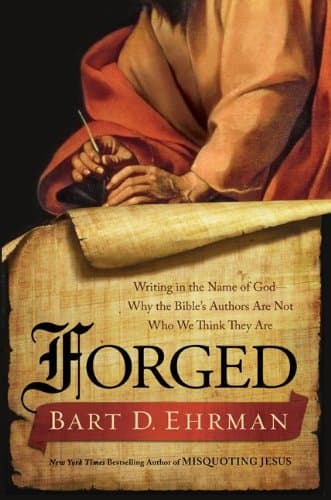
Forged: Writing in the Name of God
مزور: الكتابة باسم الله
Forgé : Écrire au nom de Dieu
Editorial summary
This monograph examines the widespread practice of literary forgery in early Christianity, arguing that numerous texts attributed to apostles and other authoritative figures were actually written by later authors falsely claiming these identities. Ehrman challenges the common scholarly euphemism of "pseudepigraphy," insisting these works should be recognized as deliberate forgeries intended to deceive their audiences.
The work analyzes approximately ten New Testament books that Ehrman identifies as forgeries, including 2 Thessalonians, Colossians, Ephesians, the Pastoral Epistles, and 1 and 2 Peter. Beyond the canonical texts, he examines numerous non-canonical writings from the first four centuries of Christianity, demonstrating that forgery was endemic across various Christian communities and theological perspectives. His analysis reveals how forgers employed sophisticated techniques to mimic the style, vocabulary, and concerns of their claimed authors while advancing their own theological agendas.
Ehrman's methodology combines traditional historical-critical analysis with insights from ancient discussions of literary forgery. He documents how ancient authors themselves recognized and condemned the practice of forgery, contradicting modern scholarly attempts to normalize pseudepigraphic writing as an acceptable ancient literary convention. The work engages critically with scholars who have minimized the deceptive nature of these texts, particularly those who argue that pseudonymous writing was considered legitimate in antiquity.
The implications for understanding early Christianity and its theological development are substantial. Ehrman demonstrates how forged texts were used to resolve doctrinal disputes, establish ecclesiastical authority, and shape Christian practice. These forgeries often addressed controversies that arose after the putative authors had died, revealing the dynamic and contested nature of early Christian belief and practice.
For the God debate, this work contributes to broader questions about religious authority and the reliability of sacred texts. By documenting the extent of forgery in early Christian literature, Ehrman undermines claims about the divine inspiration or providential preservation of scripture. His analysis suggests that many foundational Christian texts emerged through human deception rather than divine revelation, challenging traditional theological narratives about the formation of the biblical canon. The work exemplifies how historical-critical scholarship can complicate conventional religious claims about the origins and authority of sacred texts, though Ehrman focuses on historical analysis rather than explicit theological argumentation.
Argument formulations engaged
Related works
Ehrman, Bart D. (2011). Forged: Writing in the Name of God. HarperOne.
@book{forged-writing-in-the-name-of-god-2011,
  author    = {Ehrman, Bart D.},
  title     = {Forged: Writing in the Name of God},
  year      = {2011},
  publisher = {HarperOne},
  url       = {https://god-database.com/en/works/forged-writing-in-the-name-of-god-2011}
}