
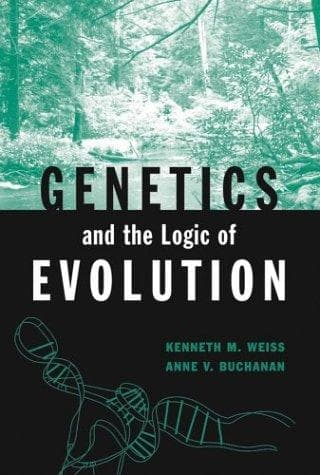
Genetics and the Logic of Evolution
علم الوراثة ومنطق التطور
La Génétique et la logique de l'évolution
Genetic evidence reveals that evolutionary processes are far more complex, contingent, and non-linear than classical Darwinian logic suggests, with significant implications for how biological design and purpose are understood.
Editorial summary
This work examines the relationship between genetic complexity and evolutionary theory, offering insights relevant to design arguments in natural theology. Weiss presents a sophisticated analysis of how genetic mechanisms operate within evolutionary processes, addressing misconceptions that often arise in debates about purposiveness in nature.
The author employs a philosophy of science approach to clarify the logical structure underlying genetic evolution. Rather than advocating for or against theological interpretations, Weiss focuses on elucidating how genes actually function as information-bearing entities subject to natural selection. He demonstrates that genetic systems exhibit both remarkable complexity and explicable natural processes, challenging oversimplified narratives from both strict mechanists and design theorists.
Central to Weiss's analysis is the observation that genetic evolution operates through principles that appear purposive without requiring conscious design. He examines how regulatory networks, gene expression patterns, and developmental pathways create emergent properties that seem goal-directed. This apparent teleology in biological systems has long been a contested point in discussions of divine design, and Weiss provides conceptual tools for understanding these phenomena without prejudging their ultimate significance.
The work engages critically with design arguments by showing how genetic evidence can be interpreted through multiple explanatory frameworks. Weiss neither endorses nor dismisses theological readings but instead clarifies what genetic science actually reveals about biological organization. He addresses common misunderstandings about randomness in mutation, the role of natural selection in producing complexity, and the relationship between genetic information and semantic meaning.
Particularly valuable is Weiss's treatment of evolutionary convergence and constraint. He shows how similar solutions repeatedly emerge in different lineages, not through predetermined design but through the interaction of physical laws, developmental possibilities, and selective pressures. This analysis provides nuanced material for those debating whether biological order implies intentional creation or emerges from natural processes alone.
The monograph's contribution lies in its careful delineation of what genetic evidence can and cannot demonstrate regarding ultimate questions. By maintaining descriptive precision while acknowledging the philosophical implications of genetic complexity, Weiss offers resources for more informed dialogue between scientific and theological perspectives on biological origins and organization.
Structured analysis
Structure of the work
Argument formulations engaged
Weiss, Kenneth (2004). Genetics and the Logic of Evolution. John Wiley & Sons, Inc..
@book{genetics-and-the-logic-of-evolution,
  author    = {Weiss, Kenneth},
  title     = {Genetics and the Logic of Evolution},
  year      = {2004},
  publisher = {John Wiley & Sons, Inc.},
  url       = {https://god-database.com/en/works/genetics-and-the-logic-of-evolution}
}