
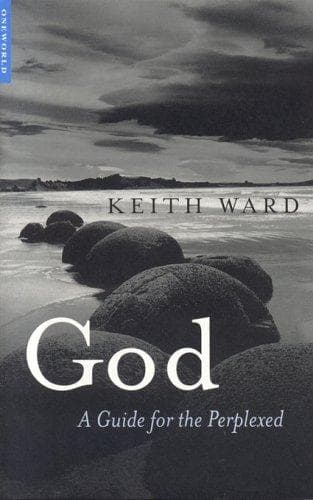
God: A Guide for the Perplexed
الله: دليل للحائرين
Dieu : Un guide pour les perplexes
Editorial summary
This accessible monograph presents a philosophical defense of theistic belief while addressing common misconceptions about the nature of God and religious faith. Ward, a philosopher of religion at Oxford, structures his argument as a response to both popular atheistic critiques and fundamentalist misrepresentations of theism, positioning himself within the tradition of philosophical theology that seeks rational grounds for belief in God.
The work begins by distinguishing between various concepts of God, arguing that many atheistic criticisms target anthropomorphic or literalist conceptions that sophisticated theists have long rejected. Ward emphasizes that classical theism understands God not as a superhuman entity within the universe but as the necessary ground of being itself. He draws on medieval philosophical traditions, particularly Aquinas and Anselm, while incorporating insights from process theology and modern physics to develop a conception of God compatible with contemporary scientific understanding.
Central to Ward's argument is his treatment of the relationship between science and religion. Against the conflict model popularized by writers like Richard Dawkins, he contends that science and theistic belief address fundamentally different questions. While science investigates the mechanisms of natural phenomena, religion concerns itself with questions of ultimate meaning, value, and purpose. Ward argues that the existence of consciousness, moral obligation, and aesthetic experience points beyond purely materialistic explanations, suggesting dimensions of reality that naturalistic accounts struggle to accommodate.
The monograph engages substantially with the problem of evil, acknowledging it as the most serious challenge to theistic belief. Ward rejects both simple free will defenses and appeals to mystery, instead developing a theodicy that emphasizes the necessarily limited and developmental character of any created order. He argues that a world capable of producing free, morally responsible beings must include the possibility of suffering and moral failure.
Ward's methodology combines analytic philosophy with insights from comparative religion, drawing examples from Christianity, Judaism, Islam, Hinduism, and Buddhism to illustrate the diversity and sophistication of theistic thought. His approach is explicitly anti-reductionist, arguing that both scientific materialism and religious fundamentalism fail to capture the complexity of human experience and the nature of ultimate reality. The work serves as both an introduction for general readers and a substantive contribution to contemporary philosophy of religion.
Argument formulations engaged
Related works
Ward, Keith (2002). God: A Guide for the Perplexed. Oneworld.
@book{god-a-guide-for-the-perplexed-2002,
  author    = {Ward, Keith},
  title     = {God: A Guide for the Perplexed},
  year      = {2002},
  publisher = {Oneworld},
  url       = {https://god-database.com/en/works/god-a-guide-for-the-perplexed-2002}
}