
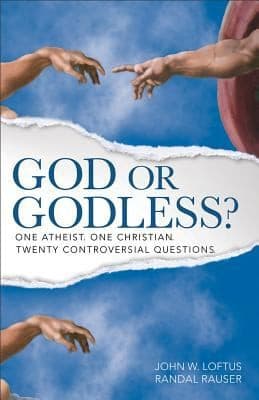
God or Godless?
الله أم اللاأدرية؟
Dieu ou sans Dieu ?
A structured point-counterpoint debate between Christian apologist Randal Rauser and atheist John W. Loftus, in which each defends twenty theses for or against the existence of God, demonstrating that neither side can claim an easy rational victory.
Editorial summary
This innovative work presents a structured philosophical dialogue between John W. Loftus, representing atheism, and Randal Rauser, defending Christian theism. The book consists of twenty debates on fundamental questions concerning God's existence, each constrained to brief opening statements, rebuttals, and closing remarks. This format compels both authors to distill complex philosophical arguments into their essential components while maintaining analytical rigor.
The debates engage classical and contemporary arguments in philosophy of religion. On cosmological grounds, Rauser defends the explanatory power of theism for the universe's existence and fine-tuning, while Loftus counters with naturalistic alternatives and challenges the inference from cosmic order to a personal deity. The moral argument receives extensive treatment, with Rauser arguing that objective moral values require divine grounding, while Loftus defends secular moral realism and highlights moral disagreements that problematize divine command theories.
Central to several exchanges is the problem of evil, where Loftus presses the evidential argument from suffering against the existence of an omnipotent, omniscient, and omnibenevolent God. He particularly emphasizes animal suffering and natural disasters as incompatible with classical theism. Rauser responds with various theodicies and the skeptical theist position that human cognitive limitations prevent definitive judgments about God's reasons for permitting evil.
The divine hiddenness problem features prominently, with Loftus arguing that God's apparent absence contradicts the Christian claim of a loving deity who desires relationship with humanity. Rauser counters by suggesting that divine hiddenness may serve morally sufficient purposes, such as preserving human freedom and preventing coerced belief. Religious experience also receives careful scrutiny, with disagreement over whether personal religious experiences can serve as evidence for God's existence given their diverse and often contradictory nature across cultures.
The work's significance lies in modeling respectful philosophical disagreement while demonstrating how core arguments in philosophy of religion function in real-time debate. By constraining responses and demanding direct engagement with opposing positions, the format reveals both the strengths and vulnerabilities of standard moves in these debates. The book serves as an excellent introduction to contemporary philosophical arguments about God while exemplifying how analytic philosophy approaches religious questions through careful argumentation rather than rhetorical persuasion.
Structured analysis
Argument formulations engaged
Loftus, John W. God or Godless?.
@book{god-or-godless,
  author    = {Loftus, John W.},
  title     = {God or Godless?},
  year      = {n.d.},
  url       = {https://god-database.com/en/works/god-or-godless}
}