
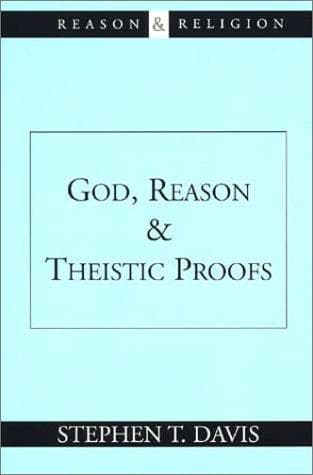
God, Reason and Theistic Proofs
الله والعقل والبراهين الإلهية
Dieu, raison et preuves théistes
Editorial summary
This monograph presents a sustained philosophical defense of natural theology, examining whether rational arguments can establish God's existence. Davis systematically evaluates five classical theistic proofs: the cosmological, teleological, ontological, religious experience, and moral arguments. His approach combines rigorous analytical philosophy with sympathetic engagement, aiming to demonstrate that while no single proof compels universal assent, theistic arguments collectively provide rational justification for belief in God.
The work begins by addressing fundamental methodological questions about what constitutes a successful theistic proof. Davis argues that demanding logical demonstration misconstrues the nature of philosophical argumentation. Instead, he proposes that theistic proofs succeed if they render belief in God more rational than disbelief for reasonable persons. This pragmatic standard shapes his subsequent analysis of each argument.
Regarding the cosmological argument, Davis defends a version based on contingency rather than temporal causation, thereby avoiding criticisms about infinite regress. His treatment of the teleological argument anticipates later debates about intelligent design, focusing on cosmic fine-tuning rather than biological complexity. The ontological argument receives careful reconstruction, with Davis arguing that modal versions escape traditional objections while remaining rationally persuasive rather than logically coercive.
Davis's discussion of religious experience arguments proves particularly innovative. He contends that widespread testimony to divine encounters creates a presumption favoring theistic interpretation unless compelling defeaters exist. Similarly, his moral argument emphasizes objective moral obligations rather than mere values, arguing that moral realism requires theistic grounding.
Throughout, Davis engages prominent critics including J.L. Mackie, Michael Martin, and William Rowe. He acknowledges that determined skeptics can resist each argument through various philosophical maneuvers. However, he maintains that such resistance often stems from prior metaphysical commitments rather than purely rational considerations.
The monograph's significance lies in its moderate position within philosophy of religion. Against both fideists who reject rational theology and naturalists who dismiss theistic arguments entirely, Davis charts a middle course. He demonstrates how theistic proofs function not as mathematical demonstrations but as philosophical arguments that shift the burden of proof and create cumulative cases.
Davis's work influences subsequent debates about natural theology's viability in contemporary philosophy. His emphasis on cumulative case reasoning and pragmatic success criteria provides a framework that many philosophers of religion adopt, whether defending or criticizing theistic arguments.
Argument formulations engaged
Related works
Davis, Stephen T. (1997). God, Reason and Theistic Proofs. Edinburgh University Press.
@book{god-reason-and-theistic-proofs-1997,
  author    = {Davis, Stephen T.},
  title     = {God, Reason and Theistic Proofs},
  year      = {1997},
  publisher = {Edinburgh University Press},
  url       = {https://god-database.com/en/works/god-reason-and-theistic-proofs-1997}
}