
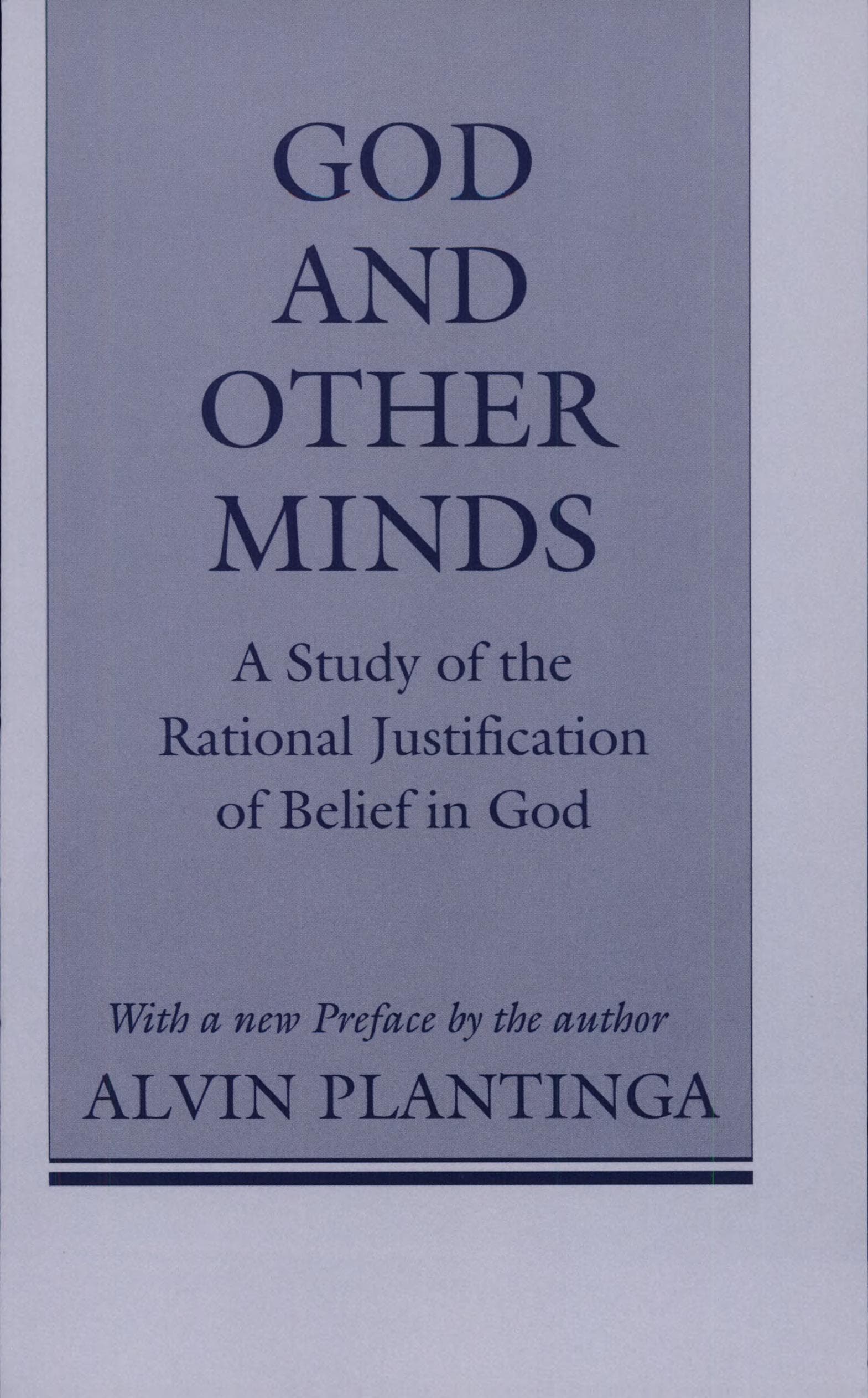
الله والعقول الأخرى
Dieu et les autres esprits
Belief in God should not be saddled with standards stricter than those applied to other rational beliefs such as belief in other minds.
Editorial summary
Alvin Plantinga's God and Other Minds represents a watershed moment in analytic philosophy of religion, offering a novel epistemological defense of theistic belief that circumvents traditional natural theology. The monograph develops what becomes known as the "parity argument": if belief in other minds is rationally justified despite lacking demonstrative proof, then belief in God enjoys similar epistemic status. This move fundamentally reframes debates about religious rationality that had dominated mid-twentieth century philosophy.
The work proceeds through careful examination of classical theistic arguments, particularly the teleological argument, demonstrating their ultimate failure to provide conclusive proof for God's existence. However, rather than concluding that theistic belief is therefore irrational, Plantinga shifts the epistemological terrain. He argues that many fundamental beliefs we hold—including belief in other minds, the external world, and the reliability of memory—cannot be proven through argument yet remain perfectly rational. The parallel drawn between belief in God and belief in other minds proves especially powerful: both involve inferring the existence of an unobservable entity from observable effects, both resist conclusive verification, yet both appear rationally permissible.
Plantinga's methodology exemplifies the rigor of analytic philosophy while challenging its prevailing assumptions about religious belief. His engagement with the burden of proof argument proves particularly significant. Where critics like Antony Flew had argued that theism bears a special burden of proof, Plantinga demonstrates that many properly basic beliefs escape such demands. The work thus undermines the presumption of atheism that had gained currency in Anglo-American philosophy.
The monograph's influence extends far beyond its immediate arguments. It legitimizes religious belief as a proper subject for analytic philosophy, helps launch the renaissance in Christian philosophy that flourishes in subsequent decades, and introduces themes—particularly regarding properly basic beliefs—that Plantinga develops more fully in later works on reformed epistemology. While critics challenge the strength of the parity between God and other minds, the work succeeds in shifting discussions from whether theistic proofs succeed to broader questions about the nature of rational belief itself. This reorientation of the debate marks God and Other Minds as a pivotal text that transforms how philosophers approach questions of religious epistemology and rational justification.
Structured analysis
Structure of the work
Argument formulations engaged
Related works
Plantinga, Alvin (1967). God and Other Minds.
@book{god-and-other-minds-a-study-of-the-ratio,
  author    = {Plantinga, Alvin},
  title     = {God and Other Minds},
  year      = {1967},
  url       = {https://god-database.com/en/works/god-and-other-minds-a-study-of-the-rational-justification-of-belief-in-god}
}