
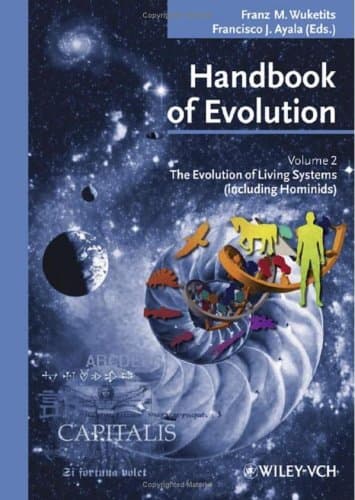
Handbook of Evolution vol.2.. Living Systems
دليل التطور، المجلد الثاني.. الأنظمة الحية
Manuel de l'évolution, vol. 2.. Les systèmes vivants
Living systems, understood through the lens of evolutionary biology, exhibit patterns of complexity and adaptation that bear directly on longstanding philosophical and theological questions about design, purpose, and the nature of life.
Editorial summary
This edited volume explores the philosophical implications of evolutionary theory for understanding living systems, with particular attention to how evolutionary biology intersects with traditional questions about design, purpose, and the nature of life. Franz M. Wuketits brings together contributions that examine evolution not merely as a biological theory but as a conceptual framework with profound philosophical consequences for how humans understand organisms, complexity, and apparent design in nature.
The volume adopts a philosophy of science approach, analyzing how evolutionary explanations function as scientific theories while engaging with their broader metaphysical implications. Contributors examine the explanatory power of natural selection, the emergence of biological complexity, and the relationship between evolutionary processes and traditional notions of design. The work situates itself within ongoing debates about whether evolutionary theory eliminates the need for design-based explanations or whether it reveals a different kind of design operating through natural processes.
Central to the volume's contribution is its careful analysis of how evolutionary thinking transforms classical philosophical questions about living systems. Rather than dismissing design intuitions entirely, the work explores how evolution reframes these intuitions within a naturalistic framework. Contributors examine specific cases of biological complexity, analyzing how features that appear designed emerge through evolutionary processes. This approach engages critically with both crude adaptationism and simplistic rejections of evolutionary theory's explanatory scope.
The handbook's significance lies in its sophisticated treatment of the design argument in light of contemporary evolutionary biology. By maintaining a descriptive stance, the volume avoids both militant atheism and defensive theism, instead focusing on what evolutionary theory actually explains and what philosophical questions remain open. The work demonstrates that while evolution provides powerful explanations for biological complexity without invoking conscious design, this does not automatically resolve all philosophical questions about ultimate origins or the nature of natural laws that permit evolution.
Wuketits's editorial framework ensures that the volume contributes substantively to discussions about God and design by clarifying what evolutionary theory does and does not claim about purpose and intention in nature. The work serves as an important resource for philosophers, theologians, and scientists seeking to understand how evolutionary biology relates to perennial questions about design, purpose, and ultimate explanation in the natural world.
Structured analysis
Argument formulations engaged
Wuketits, Franz M. (2005). Handbook of Evolution vol.2.. Living Systems. Wiley-VCH.
@book{handbook-of-evolution-vol2-living-system,
  author    = {Wuketits, Franz M.},
  title     = {Handbook of Evolution vol.2.. Living Systems},
  year      = {2005},
  publisher = {Wiley-VCH},
  url       = {https://god-database.com/en/works/handbook-of-evolution-vol2-living-systems}
}