
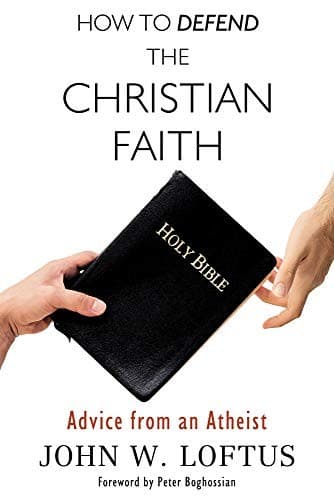
How to Defend the Christian Faith: Advice from an Atheist
كيف تدافع عن الإيمان المسيحي: نصيحة من ملحد
Comment défendre la foi chrétienne : Conseils d'un athée
Editorial summary
Loftus presents a provocative analysis of Christian apologetics from his perspective as a former evangelical minister turned atheist. His work offers strategic advice to Christian defenders while simultaneously exposing what he considers fundamental flaws in their argumentative approaches. The text operates as both a critique of contemporary apologetic methods and an ironic guide that reveals the intellectual vulnerabilities of Christian faith claims.
The author structures his argument around the premise that honest engagement with skeptical challenges would benefit Christian apologists more than their current defensive strategies. Loftus contends that most apologetic efforts fail because they rely on circular reasoning, special pleading, and selective use of evidence. He identifies specific weaknesses in popular apologetic arguments, including the cosmological argument, appeals to biblical prophecy, and claims about the resurrection. His analysis draws from his insider knowledge of evangelical intellectual culture, having previously taught apologetics and philosophy of religion.
Central to Loftus's approach is what he terms the "Outsider Test for Faith," which challenges believers to evaluate their own religious claims with the same skeptical scrutiny they apply to other religions. He argues that Christianity survives primarily through cultural transmission and emotional investment rather than rational justification. The work engages critically with prominent apologists including William Lane Craig, Gary Habermas, and Norman Geisler, demonstrating how their arguments often presuppose what they seek to prove.
The monograph's significance lies in its dual function as both a manual for more rigorous apologetics and a systematic deconstruction of Christian truth claims. Loftus employs philosophical analysis, historical criticism, and cognitive science research to explain why apologetic arguments that seem convincing to believers fail to persuade outsiders. He particularly emphasizes how cognitive biases and motivated reasoning shape religious conviction.
While ostensibly offering advice to strengthen Christian defenses, Loftus ultimately argues that intellectually honest apologetics would lead to abandonment of faith. His work contributes to the God debate by demonstrating how insider knowledge of religious reasoning can be deployed for skeptical purposes. The text represents a significant addition to atheist literature, particularly in its strategic use of irony to advance naturalistic explanations for religious belief while maintaining engagement with theological arguments on their own terms.
Argument formulations engaged
Related works
Loftus, John W. (2015). How to Defend the Christian Faith: Advice from an Atheist. Pitchstone Publishing.
@book{how-to-defend-the-christian-faith-advice,
  author    = {Loftus, John W.},
  title     = {How to Defend the Christian Faith: Advice from an Atheist},
  year      = {2015},
  publisher = {Pitchstone Publishing},
  url       = {https://god-database.com/en/works/how-to-defend-the-christian-faith-advice-from-an-atheist-2015}
}