
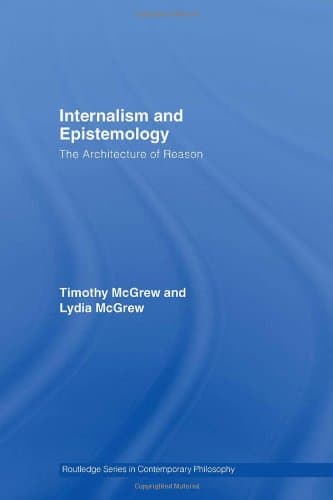
Internalism and Epistemology
الداخلانية ونظرية المعرفة
Internalisme et épistémologie
Editorial summary
This monograph examines the internalist approach to epistemology and its implications for religious belief, particularly knowledge claims about God. McGrew defends epistemic internalism against externalist challenges while demonstrating how internalist principles apply to theistic belief formation and justification.
The work begins by establishing the core internalist thesis that epistemic justification depends on factors accessible to the believing subject through reflection. McGrew argues that what makes a belief justified must be something the believer can recognize from the first-person perspective, distinguishing this position from externalist theories that ground justification in reliability, proper function, or causal connections beyond the agent's awareness. He addresses standard objections to internalism, including the problem of forgotten evidence and concerns about infinite regress, offering sophisticated responses that preserve the internalist's central insights.
McGrew then applies internalist principles to religious epistemology, examining how believers might have internally accessible grounds for theistic belief. He considers various types of evidence available to conscious reflection, including religious experience, natural theology arguments, and testimony. The analysis demonstrates that internalism need not disadvantage religious belief, contrary to some contemporary assumptions. McGrew argues that many theistic beliefs can meet internalist standards of justification when properly grounded in accessible evidence and reasoning.
The monograph engages critically with reformed epistemology and its externalist tendencies, particularly Plantinga's proper functionalism. While acknowledging the insights of externalist approaches to religious knowledge, McGrew contends that internalism better captures our intuitive understanding of epistemic responsibility and the normative dimension of belief formation. He shows how internalist requirements for justification align with traditional evidentialist approaches to natural theology while remaining open to experiential grounds for religious belief.
The work contributes significantly to debates about the rationality of theistic belief by demonstrating that demanding internalist standards need not undermine religious epistemology. McGrew's careful analysis reveals how believers can satisfy rigorous epistemic requirements through reflectively accessible evidence and reasoning. His defense of internalism challenges both the externalist consensus in contemporary epistemology and the assumption that traditional evidential approaches to theistic belief are philosophically naive. The monograph thus provides important resources for those seeking to defend the rational credentials of theistic belief within a framework that takes seriously our epistemic obligations and the first-person perspective of the believing subject.
Argument formulations engaged
McGrew, Timothy (2007). Internalism and Epistemology. Routledge.
@book{internalism-and-epistemology-2007,
  author    = {McGrew, Timothy},
  title     = {Internalism and Epistemology},
  year      = {2007},
  publisher = {Routledge},
  url       = {https://god-database.com/en/works/internalism-and-epistemology-2007}
}