
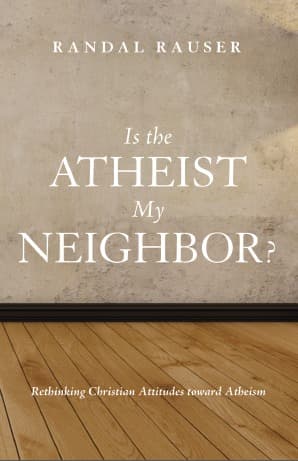
Is the Atheist My Neighbor? Rethinking Christian Attitudes toward Atheism
هل الملحد جاري؟ إعادة التفكير في المواقف المسيحية تجاه الإلحاد
L'athée est-il mon voisin ? Repenser les attitudes chrétiennes envers l'athéisme
Editorial summary
This monograph challenges widespread Christian misconceptions about atheism and advocates for a more charitable, intellectually honest engagement with non-believers. Rauser, writing from within the evangelical tradition, confronts the tendency among many Christians to demonize atheists and misrepresent their motivations for rejecting belief in God.
The work centers on dismantling what Rauser terms the "Rebellion Thesis" - the prevalent Christian assumption that atheists reject God primarily due to moral rebellion, pride, or a desire to avoid divine accountability. Drawing on psychological research, philosophical analysis, and personal narratives from atheists themselves, Rauser demonstrates that most atheists arrive at their position through sincere intellectual inquiry rather than moral defiance. He argues that perpetuating caricatures of atheists as inherently immoral or intellectually dishonest violates basic Christian principles of charity and truthfulness.
Rauser employs a multi-disciplinary approach, incorporating insights from cognitive science of religion, moral psychology, and epistemology. He examines how cognitive biases affect both religious and non-religious individuals, suggesting that the path to atheism often involves the same rational processes that might lead others to theism. The author particularly critiques popular Christian apologists who promote adversarial approaches to atheism, arguing that such tactics damage Christian credibility and hinder productive dialogue.
The monograph's significance lies in its internal critique of Christian apologetics and its call for reform in how believers approach religious disagreement. By advocating for intellectual empathy and genuine engagement with atheist arguments, Rauser challenges the defensive posture that characterizes much Christian-atheist interaction. He contends that Christians can maintain their theological convictions while acknowledging that atheists may have rational, morally serious reasons for their non-belief.
The work contributes to broader discussions about religious epistemology, the ethics of belief, and inter-worldview dialogue. Rauser's position represents a moderate voice within evangelical Christianity, pushing against both aggressive apologetics and religious relativism. His argument that Christians should view atheists as intellectual neighbors rather than enemies offers a framework for more constructive engagement across worldview boundaries. The monograph ultimately serves as both a corrective to Christian apologetics and a model for how religious believers might engage respectfully with those who reject their fundamental premises while maintaining their own convictions.
Argument formulations engaged
Related works
Rauser, Randal (2015). Is the Atheist My Neighbor? Rethinking Christian Attitudes toward Atheism. Cascade Books.
@book{is-the-atheist-my-neighbor-rethinking-ch,
  author    = {Rauser, Randal},
  title     = {Is the Atheist My Neighbor? Rethinking Christian Attitudes toward Atheism},
  year      = {2015},
  publisher = {Cascade Books},
  url       = {https://god-database.com/en/works/is-the-atheist-my-neighbor-rethinking-christian-attitudes-toward-atheism-2015}
}