
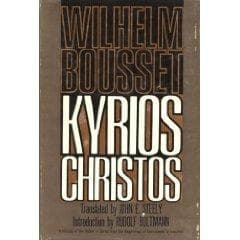
Kyrios Christos
كيريوس خريستوس
Editorial summary
This groundbreaking work in early Christianity studies examines the development of christological beliefs from the primitive Palestinian community to the Hellenistic churches of the first century. Bousset argues that the confession of Jesus as "Lord" (Kyrios) represents a decisive transformation that occurred when Christianity moved from Jewish Palestinian soil to the Hellenistic world. His central thesis contends that the worship of Jesus as a divine figure emerged not from Jesus' self-understanding or the beliefs of his immediate followers, but through contact with Hellenistic mystery religions and their cult practices.
Employing the religionsgeschichtliche Schule (history of religions) methodology, Bousset analyzes early Christian texts alongside contemporary mystery cults, particularly those of Isis, Osiris, and Mithras. He argues that the Palestinian community viewed Jesus primarily as the coming Messiah and Son of Man, maintaining essentially Jewish monotheistic beliefs. The radical shift to worshipping Jesus as Kyrios, a divine Lord deserving of cultic devotion, occurred in cities like Antioch and Damascus where Hellenistic religious sensibilities predominated.
The work systematically traces this development through analysis of Paul's letters, arguing that Paul inherited rather than created the Kyrios cult. Bousset examines liturgical formulas, particularly the Aramaic "Maranatha," which he interprets as evidence of transition rather than Palestinian origin of Lord-worship. His treatment of the Gospel traditions suggests that divine titles and worship practices were retroactively projected onto the historical Jesus by Hellenistic communities.
This thesis fundamentally challenges traditional Christian claims about the continuity between Jesus and the early church's high christology. By locating the origins of Jesus' divinity in religious syncretism rather than revelation or apostolic witness, Bousset's work has profound implications for theological discussions about God's nature and action in history. His methodology, which treats early Christianity as one religious phenomenon among many in the ancient world, exemplifies the modern critical approach to religious texts and traditions.
The work's influence extends beyond New Testament studies to fundamental questions about religious development, the relationship between cultural context and theological claims, and the historical grounding of beliefs about divine incarnation. Though subsequent scholarship has challenged many of Bousset's specific conclusions, his basic problematic remains central to contemporary debates about early high christology and the emergence of Christianity's distinctive claims about God's presence in Christ.
Argument formulations engaged
Related works
Bousset, Wilhelm (1913). Kyrios Christos. Abingdon Press.
@book{kyrios-christos-1913,
  author    = {Bousset, Wilhelm},
  title     = {Kyrios Christos},
  year      = {1913},
  publisher = {Abingdon Press},
  url       = {https://god-database.com/en/works/kyrios-christos-1913}
}