
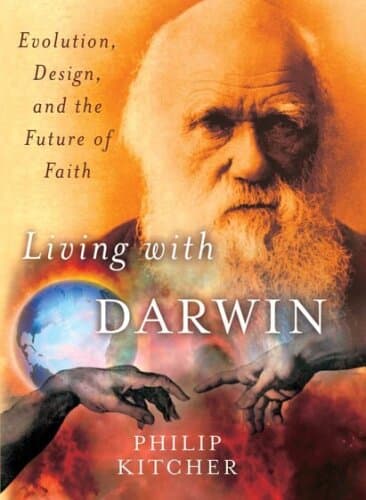
Living with Darwin: Evolution, Design, and the Future of Faith
العيش مع داروين: التطور والتصميم ومستقبل الإيمان
Vivre avec Darwin : Évolution, dessein intelligent et l'avenir de la foi
Editorial summary
Philip Kitcher's Living with Darwin: Evolution, Design, and the Future of Faith examines the persistent conflict between evolutionary theory and religious belief in contemporary American society. Writing as a philosopher of science, Kitcher argues that while Darwin's theory poses no threat to sophisticated forms of religious faith, it does fatally undermine literalist interpretations of scripture and traditional design arguments for God's existence.
The work unfolds in three main movements. First, Kitcher presents a clear exposition of evolutionary theory and its overwhelming evidential support, demonstrating why scientific consensus regards evolution as established fact rather than mere hypothesis. He traces the development from Darwin's original insights through the modern synthesis, showing how multiple independent lines of evidence converge to support common descent and natural selection. Second, he systematically dismantles the claims of intelligent design theory, exposing its scientific inadequacies and revealing it as a politically motivated attempt to smuggle creationism into public education. Kitcher argues that intelligent design fails both as science and as theology, offering neither testable hypotheses nor coherent alternatives to evolutionary mechanisms.
Most significantly, Kitcher explores what he terms "Darwin's dangerous idea" - the notion that natural selection can produce apparent design without a designer. He contends this insight extends beyond biology to threaten traditional natural theology and providential interpretations of nature. While acknowledging that evolution cannot disprove God's existence, Kitcher maintains it eliminates one of the strongest traditional arguments for theism. He distinguishes between "spiritual religion" - focused on values, meaning, and ethical orientation - and "doctrinal religion" dependent on specific factual claims about divine action in nature. The former, he suggests, remains viable post-Darwin, while the latter faces insurmountable challenges.
Kitcher's philosophical approach combines conceptual analysis with cultural criticism, examining not just the logical relations between science and religion but their sociological dynamics in American public life. He advocates for honest acknowledgment of the tensions Darwin creates for traditional faith while seeking common ground between religious and secular worldviews in shared ethical commitments. His "soft atheism" respects the human needs religion addresses while insisting that supernatural explanations must yield to naturalistic ones. The work contributes to the God debate by articulating a middle position that neither dismisses religious impulses nor compromises scientific integrity, though ultimately concluding that literal theism cannot survive evolutionary understanding.
Argument formulations engaged
Related works
Kitcher, Philip (2007). Living with Darwin: Evolution, Design, and the Future of Faith. Oxford University Press, USA.
@book{living-with-darwin-evolution-design-and-,
  author    = {Kitcher, Philip},
  title     = {Living with Darwin: Evolution, Design, and the Future of Faith},
  year      = {2007},
  publisher = {Oxford University Press, USA},
  url       = {https://god-database.com/en/works/living-with-darwin-evolution-design-and-the-future-of-faith-2007}
}