
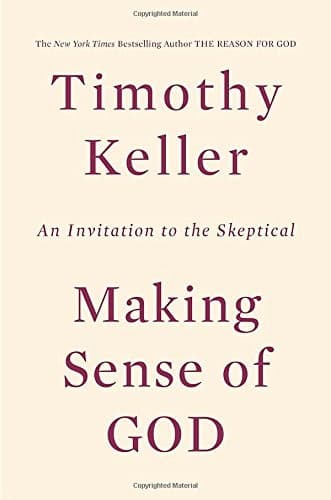
Making Sense of God: An Invitation to the Skeptical
فهم الله: دعوة للمتشككين
Donner un sens à Dieu : une invitation au sceptique
Editorial summary
Timothy Keller's Making Sense of God: An Invitation to the Skeptical presents a sophisticated apologetic engagement with contemporary secular thought, arguing that belief in God provides more satisfying answers to fundamental human questions than secular alternatives. Written specifically for skeptics rather than believers, the work attempts to clear intellectual ground before making the case for Christianity, distinguishing it from Keller's earlier The Reason for God by focusing on why one might consider faith rather than directly arguing for its truth.
Keller structures his argument around a comparative analysis of how secular and religious worldviews address universal human needs for meaning, satisfaction, freedom, identity, hope, and justice. Rather than beginning with traditional proofs for God's existence, he employs what might be termed a "pragmatic transcendental" approach, arguing that secular frameworks prove existentially inadequate when addressing these fundamental concerns. The work engages extensively with contemporary secular thinkers including Charles Taylor, Thomas Nagel, and Julian Barnes, while drawing on sociological data about religious belief patterns in modern societies.
Central to Keller's method is his critique of what he terms "exclusive humanism" - the view that human flourishing requires no transcendent reference point. He argues that secularism's promises of freedom and progress often lead to new forms of bondage and despair, citing rising rates of anxiety and depression in affluent secular societies. Particularly notable is his engagement with the problem of moral obligation, where he contends that secular ethics cannot adequately ground human rights or explain why individuals should sacrifice for others when it conflicts with self-interest.
The work responds to New Atheist critiques while primarily engaging more sophisticated secular philosophers. Keller addresses standard objections about religious violence, science-faith conflicts, and the problem of evil, but frames these discussions within his broader argument about life satisfaction and meaning. His treatment draws heavily on Augustine, Pascal, and C.S. Lewis, updating their insights for contemporary audiences.
The book's significance lies in its shift from defensive apologetics to an offensive case that secularism fails by its own standards. By arguing that everyone operates with unprovable assumptions about reality, Keller attempts to level the epistemic playing field between religious and secular worldviews. This approach reflects broader trends in post-secular philosophy that question whether pure religious neutrality is possible or desirable in addressing ultimate questions about human existence.
Argument formulations engaged
Related works
Keller, Timothy (2016). Making Sense of God: An Invitation to the Skeptical. Viking.
@book{making-sense-of-god-an-invitation-to-the,
  author    = {Keller, Timothy},
  title     = {Making Sense of God: An Invitation to the Skeptical},
  year      = {2016},
  publisher = {Viking},
  url       = {https://god-database.com/en/works/making-sense-of-god-an-invitation-to-the-skeptical-2016}
}